- All
- Product Name
- Product Keyword
- Product Model
- Product Summary
- Product Description
- Multi Field Search

Views: 0 Author: Site Editor Publish Time: 2026-07-20 Origin: Site
High-density storage systems present a unique operational reality. Systems where forklifts physically enter the structure carry a significantly higher probability of catastrophic impact damage compared to selective racking. When operators navigate tight clearances daily, moving heavy loads within inches of structural steel, minor miscalculations translate directly into structural stress. Unnoticed structural fatigue, missing components, or minor deflections in high-traffic aisles can lead to progressive collapse, resulting in severe OSHA penalties, inventory loss, and life-safety hazards. A compromised upright deep within a bay might go unnoticed during a casual walkthrough, but it severely degrades the load-bearing capacity of the entire structural block. Mitigating these risks requires moving beyond generic warehouse checklists to implement specialized, frequency-based inspection protocols tailored specifically to the engineering vulnerabilities of drive-in systems. Standard visual sweeps fall short. You need a targeted approach that addresses the specific wear patterns, impact zones, and operational stresses unique to these high-density configurations.
Specialized Vulnerability: Drive-in systems require targeted inspections of internal uprights, support arms, and rails due to constant, close-proximity forklift interactions.
Tiered Inspection Frequency: Compliance and risk mitigation demand a three-tiered approach: daily internal visual checks, monthly operational audits, and annual third-party professional inspections.
Strict RMI Compliance: Adherence to Rack Manufacturers Institute (RMI) guidelines—including load centering, pallet integrity, and forklift matching—is critical for defending against OSHA General Duty Clause violations.
Actionable Tagging Systems: Effective inspections must culminate in a standardized Red/Amber/Green tagging system to immediately isolate compromised rack sections and prevent unauthorized loading.
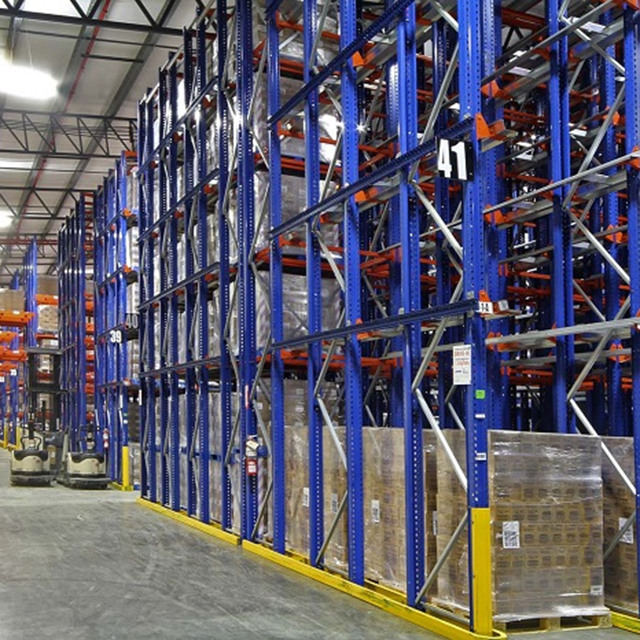
A safe Drive in Racking system relies on strict structural integrity, precise alignment, and maintained operational clearance. Unlike standard selective racks where forklifts remain in wide aisles, drive-in configurations require material handling equipment to drive directly into the storage bays. This fundamental difference redefines what constitutes a safe operating environment and dictates a much stricter inspection methodology. You are no longer just looking at the front face of the aisle; you must evaluate the internal tunnel where the equipment operates.
Vulnerability Factor | Selective Racking | Drive-in Racking |
|---|---|---|
Forklift Interaction | Front face only. Wide aisles provide ample maneuvering space. | Internal bay entry. Forklifts operate within inches of uprights. |
Impact Zones | Aisle-facing base plates and lower uprights. | All internal uprights, support arms, and continuous rails deep within the bay. |
Load Distribution | Beams transfer load directly to front and rear frames. | Rails transfer load to arms, creating eccentric loading on uprights. |
Pallet Dependency | Pallets rest on front and rear beams. Minor pallet damage is less critical. | Pallets rest on side rails. Undersized or damaged pallets risk fatal drop-through. |
The mechanics of forklifts entering the rack bay exponentially increase the risk of localized damage. Base plates, floor anchors, and lower internal uprights absorb the brunt of accidental impacts. When a forklift turns slightly too early or enters at a slight angle, the counterweight or the forks strike the steel frames. Over time, these repeated low-speed impacts shear anchor bolts and bend internal uprights, compromising the vertical load transfer path. The deeper the forklift travels into the system, the higher the risk of scraping the support arms or dislodging the continuous rails.
Environments utilizing cold storage drive in racking face amplified risks. Sub-zero temperatures alter the physical properties of steel, increasing brittleness and causing component contraction. A minor impact that might only dent a frame at room temperature can cause a brittle fracture in a freezer environment. You must account for these metallurgical changes during any structural assessment.
Operators in cold storage also face increased risks of driving errors. Reduced visibility from fog, ice accumulation on floors, and bulky cold-weather gear impede precise maneuvering. Furthermore, thermal cycling during defrost phases creates condensation. This moisture accelerates oxidation, leading to hidden rust in weld joints and hardware connections that weaken the structure from the inside out. Inspectors must look closely at the base plates and lower arm connections where moisture tends to pool and freeze.
Safe operation heavily depends on strict adherence to driving protocols. The Rack Manufacturers Institute (RMI) outlines specific safety recommendations regarding maximum safe entry speeds and proper mast tilt during entry. Operators must enter the bays slowly, keep the mast perfectly vertical, and follow strict backing-out protocols. Inspections must therefore evaluate not just the steel, but the physical signs of poor driving habits. Scraped paint on lower rails, displaced pallets, and rubber marks on the internal uprights all point to operational deficiencies that will eventually cause a structural failure.
Navigating the regulatory landscape governing warehouse storage systems requires understanding the specific standards applied to high-density environments. Facility managers must evaluate their systems against established compliance dimensions to avoid penalties and ensure worker safety. Ignorance of these standards does not shield a facility from liability following an incident.
OSHA does not have a specific, standalone standard exclusively for pallet racks. Instead, they enforce racking safety under Section 5(a)(1), known as the General Duty Clause. This clause requires employers to provide a workplace free from "recognized industry hazards" that cause or are likely to cause death or serious physical harm. Damaged racking is universally recognized as a severe hazard. OSHA inspectors rely on this clause to issue citations when facilities fail to maintain their storage systems according to industry consensus standards. If an inspector sees a bent upright or a missing anchor bolt, they will cite the General Duty Clause.
The Rack Manufacturers Institute provides the definitive engineering and safety standards for drive in pallet racking. RMI guidelines dictate structural tolerances, required load capacity labels, and approved modification procedures. Compliance with RMI standards serves as the primary defense against OSHA citations. Inspections must verify that the system operates within RMI deflection limits and that no unauthorized structural modifications have compromised the original engineering design. You must measure out-of-plumb conditions and verify that the system matches the original engineered drawings.
Effective physical inspections break down the process into distinct structural zones. This categorical approach ensures evaluators assess every critical component without missing hidden stress points. You need a systematic method to walk the aisles and document the condition of the steel.
Clear the Aisle: Ensure the bay is free of active forklift traffic before entering on foot.
Inspect the Base: Check floor anchors, base plates, and column protectors for impact damage or sheared bolts.
Measure Deflection: Use a level to check the uprights for out-of-plumb or out-of-straight conditions exceeding 0.5 inches per 10 feet.
Examine Connections: Inspect the arm-to-upright connections for missing safety pins or deformed brackets.
Check the Rails: Look down the length of the continuous pallet support rails for bowing, twisting, or weld fractures.
Verify Top Ties: Look up to ensure overhead tie beams and top-cross bracing are intact and properly bolted.
Assess Pallets: Evaluate the condition and sizing of the pallets currently resting on the rails.
Inspectors must measure out-of-plumb and out-of-straight deflections. They identify structural deviations exceeding RMI limits, which generally restrict bowing to 0.5 inches over a 10-foot run. Evaluators check for sheared, loose, or missing floor anchor bolts, which anchor the entire system against lateral forces. A missing anchor bolt severely reduces the frame's ability to withstand a forklift impact.
Column protectors and guardrails require close evaluation for hidden impact damage. Often, a damaged protector conceals a severely compromised upright behind it. Inspectors also look for hairline weld fractures and paint flaking around joints, as these visually indicate severe localized stress that precedes a structural tear. You must look behind the protectors to see the true condition of the base plate.
The continuous pallet support rails carry the entire weight of the stored inventory. Inspectors check these rails for bowing, twisting, or weld fractures. The integrity of arm-to-upright connections is equally critical. Evaluators look for sheared pins, deformed brackets, and missing safety clips that secure the arms to the frames. If an arm fails, the rail drops, and the pallets fall.
Overhead tie beams and top-cross bracing require assessment for structural continuity and mechanical alignment. These top-level components stabilize the entire bay structure, preventing the tall frames from swaying or spreading under heavy loads. Missing top ties allow the frames to spread apart, increasing the risk of pallets dropping through the rails.
Inspections verify the presence, legibility, and accuracy of Load Application and Rack Configuration (LARC) drawings and labels. These plaques must clearly state the maximum permissible loads. Evaluators confirm the system has not been reconfigured, such as changing rail elevations, without formal engineering approval. Unauthorized changes invalidate the capacity ratings and create massive liability.
Pallet dimensional tolerances play a massive role in system safety. Inspectors verify that pallet width matches the designed rail spacing exactly. This avoids the fatal "drop-through" risks associated with undersized or damaged pallets slipping off the support rails. A pallet that is even one inch too narrow can easily fall if placed slightly off-center.
Evaluators assess the condition of the pallets themselves, looking for cracked wood, loose fasteners, and structural deflection under weight. Finally, inspections assess operator adherence to load centering. Proper load distribution prevents point-loading on a single rail side, which can twist the support arms and lead to localized failure. Operators must place the pallet perfectly square on the rails.
Establishing a realistic, scalable timeline for inspections depends on facility traffic levels, equipment types, and environmental factors. A layered approach ensures continuous oversight and catches minor damage before it escalates into a major structural failure.
Forklift operators and shift supervisors should conduct daily or weekly visual checks. These internal sweeps focus on obvious impact damage, displaced loads, and debris in the aisles. Operators must report any new dents or scraped paint immediately before loading additional pallets into a potentially compromised bay. This is the first line of defense against progressive collapse.
A designated safety officer conducts a more systematic review monthly or quarterly. This audit documents minor deflections, checks anchor bolts, and ensures previously noted issues haven't degraded further. The safety officer updates the internal maintenance log and verifies that operators follow proper entry speeds and load centering protocols. They should walk every aisle with a flashlight and a standardized checklist.
Annual inspections represent the industry standard for high-traffic or heavy-forklift-use facilities. An independent engineer or certified inspector brings specialized tools and expertise to identify micro-fractures and verify overall system compliance. They provide an unbiased assessment of the structure's health, ensuring no internal biases minimize severe risks. They will also provide the stamped documentation needed to prove compliance to OSHA.
Maintaining high-density systems involves navigating operational realities and common failure points. Recognizing these implementation risks prevents minor oversights from becoming major safety incidents. You must control the variables that interact with the steel structure.
A significant risk involves utilizing new or rented material handling equipment that does not match the original engineered clearances of the bays. If a facility upgrades to wider forklifts without verifying rack dimensions, the equipment will inevitably strike the internal uprights. Always verify MHE dimensions against the specific bay clearances before authorizing use. The outriggers and the overhead guard must clear the rails and the arms with sufficient margin.
Mixing manufacturer components or utilizing third-party non-OEM parts creates severe structural liabilities. Different brands use varying steel gauges and connection tolerances. Executing unauthorized welding repairs without OEM or structural engineer sign-off voids warranties and transfers all liability to the facility owner. Always use exact OEM replacements for damaged parts. Never allow a maintenance technician to weld a patch onto a damaged upright.
Facilities must implement a strict risk-isolation protocol using a standardized tagging system. You need clear rules for when to stop loading a bay.
Red Tag: Immediate offload and shutdown due to critical structural failure, sheared anchors, or severe out-of-plumb deflection exceeding RMI limits. Do not allow anyone to enter the bay.
Amber Tag: Damaged but stable. The section requires scheduled repair within a designated timeframe of 1 to 4 weeks. Operators must exercise extreme caution and avoid loading the specific damaged level.
Green Tag: Insignificant damage, such as minor paint scrapes. The bay remains safe for continuous operations but requires monitoring during the next audit.
Facility managers often weigh the costs and liabilities of keeping inspections entirely in-house versus hiring specialized firms. Understanding the conceptual trade-offs helps determine the best approach for your operation. You must balance the budget against the risk profile of the facility.
Relying solely on internal audits saves upfront capital but massively increases liability. If a collapse occurs, OSHA will scrutinize the qualifications of the internal inspector. Analyzing the upfront cost of a professional audit against the financial ruin of a rack collapse, workers' compensation claims, and severe fines makes third-party services a logical risk-mitigation strategy. You are paying for the transfer of liability and the assurance of expert oversight.
A qualified service delivers comprehensive documentation. Expect CAD drawings mapping damaged locations across your floor plan. The report will provide a clear prioritization of repairs based on severity, specific component replacement lists, and delivery of the final documentation within a short timeframe. Most importantly, professional reports often include stamped engineering approval, validating your compliance efforts. This document becomes your primary defense during an OSHA audit.
Audit your current load capacity labels immediately to ensure they accurately reflect the installed configuration and are highly visible to all operators.
Establish a strict, penalty-free internal reporting system for forklift impacts, empowering operators to report damage the moment it occurs.
Implement a standardized Red/Amber/Green tagging system to physically isolate compromised rack sections and prevent unauthorized loading.
Schedule a baseline professional inspection with a certified third-party engineer if your facility has not undergone a formal audit in the last 12 months.
A: OSHA does not have a specific standard for pallet racks but enforces safety under the General Duty Clause. They rely on RMI standards to determine if a facility maintains a safe environment. Regular inspections are legally necessary to prove compliance and avoid citations for recognized hazards.
A: Costs vary based on facility square footage, the number of pallet positions, and travel overhead for the inspectors. You can expect a realistic framework to scale with the density and complexity of your specific layout and environmental conditions.
A: The most common causes include forklift impacts to lower uprights, incorrect pallet sizing leading to rail slips, and compromised wood or plastic pallets deflecting and falling through the support rails under heavy loads.
A: Cold storage causes thermal contraction and increases steel brittleness. Inspections must account for increased impact risks from ice buildup, reduced operator visibility, and the need to monitor specialized cold-environment steel for micro-fractures caused by low temperatures.
A: No. You must use OEM parts and require certified engineering oversight for any repairs. Unauthorized welding or mixing non-OEM components voids system warranties, compromises structural integrity, and transfers total liability to the facility owner.
A: Timelines depend on facility size, bay density, and operational disruption limits. A standard inspection might take a few days for a medium-sized facility, while massive distribution centers require phased inspections over several weeks to minimize workflow interruptions.