- All
- Product Name
- Product Keyword
- Product Model
- Product Summary
- Product Description
- Multi Field Search

Views: 0 Author: Site Editor Publish Time: 2026-06-25 Origin: Site
Investing in an Automated Storage and Retrieval System requires significant capital. You face unique challenges when building in seismically active zones or regions enforcing strict building codes. Standard racking structures often fall short here, posing severe compliance and operational continuity risks.
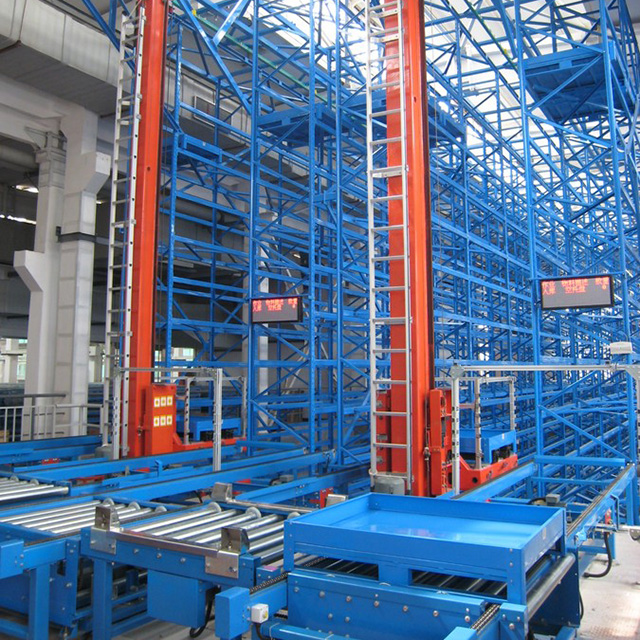
These environments differ drastically from traditional static warehouses. Your ASRS racking serves as the precise operating track for fast-moving cranes, shuttles, and delicate automation equipment. Even minor seismic deflections can trigger catastrophic system jams or severe hardware failure.
This comprehensive guide breaks down the engineering realities of securing automated facilities against earthquakes. We outline robust vendor evaluation frameworks to help you make informed decisions. You will also learn to navigate hidden implementation risks, ensuring you procure compliant and reliable seismic resistant ASRS racking.
Precision is paramount: Seismic ASRS design goes beyond preventing collapse; it must strictly limit system deflection to protect automation hardware during minor tremors.
Site-specific engineering is mandatory: Valid vendor proposals require integration with local geotechnical data (soil reports) and structural engineering standards (e.g., IBC, RMI).
Slab dependency: The most robust racking design will fail if the warehouse concrete slab and sub-soil cannot support the localized seismic overturning forces.
Lead time realities: Expect a 15–30% premium in material costs and extended engineering lead times compared to non-seismic systems.
Standard storage systems focus entirely on static vertical loads. They simply hold pallets in place under normal gravity. Seismic events introduce violent, unpredictable dynamic horizontal and vertical forces. When an earthquake hits, standard racks bend, sway, and twist. These movements easily exceed the microscopic tolerances required by automated systems.
Excessive deflection derails automated cranes instantly. It binds fast-moving shuttle tracks and crushes delicate sensors. You will face prolonged downtime. Recovering from a jammed automated matrix requires highly dangerous manual intervention and massive repair bills. A system failure here freezes your entire supply chain.
Local municipalities enforce stringent Seismic Design Categories (SDC). Building inspectors strictly evaluate high-density automated storage structures. Failure to meet these specific local standards means you will fail your final inspection. Authorities will deny your facility occupancy permits outright.
You cannot easily retrofit a non-compliant automated structure after installation. The process proves virtually impossible. Adding structural bracing or swapping base plates in a fully loaded, electrified matrix creates astronomical expenses. Doing it right the first time remains your only viable option.
Do not view seismic upgrades as a simple material premium. Frame this investment strategically. Treat it as a vital insurance policy. It directly protects the tens of millions of dollars you spent on sophisticated automation hardware. It safeguards your critical inventory from physical destruction.
Most importantly, proper engineering guarantees business continuity. A robust design ensures your facility resumes operations quickly after a seismic event. This rapid recovery protects your market share and maintains customer trust during regional crises.
Standard open-roll formed steel twists violently under earthquake stress. Engineers solve this dangerous torsion by upgrading the fundamental materials. They transition designs to closed-tube box columns. They also specify significantly thicker gauge steel for all load-bearing components.
These structural upgrades drastically increase the rack's rigidity. A stiffer frame resists torsional twisting and limits horizontal sway. This stiffness keeps the crane tracks perfectly aligned, protecting your valuable automation assets during tremors.
Your racking system must transfer massive dynamic forces safely into the ground. Standard footings simply rip out of the concrete. Engineers deploy oversized, ultra-thick base plates to fix this. These larger plates distribute extreme overturning moments safely across a wider surface area.
Installers must use specialized chemical anchors or heavy-duty mechanical anchor bolts. Structural engineers tailor these specific anchors to match your exact concrete psi and slab thickness. They calculate the precise embedment depth required to prevent catastrophic foundation pull-out.
Independent storage aisles sway at different frequencies during an earthquake. If they crash together, the system collapses. Engineers prevent this by implementing heavy structural bracing towers throughout the grid. They add cross-aisle ties and heavy-duty horizontal struts.
This comprehensive bracing strategy creates a highly rigid, unified structural block. Instead of swaying independently, the entire automated matrix moves as one cohesive unit. This unified movement prevents internal collisions and track misalignment.
Hardware upgrades only solve half the problem. Software plays a massive role in seismic defense. Engineers configure your Warehouse Management System (WMS) strategically. The software automatically distributes inventory weight across the structure based on seismic logic.
The WMS intentionally keeps heavier loads in the lower bays. It places lighter goods higher up. This smart distribution drastically reduces the system's center of gravity. A lower center of gravity heavily reduces overturning forces during active seismic shaking.
Best Practice: Always consult your structural engineer before making major changes to your expected inventory profiles. Introducing heavier pallets later can void your seismic compliance.
You must reject generic "seismic-ready" marketing claims immediately. These buzzwords carry zero legal or structural weight. You need cold, hard mathematical proof. Insist on comprehensive, site-specific design calculations.
A licensed Professional Engineer (PE) actively registered in the state of installation must legally stamp these documents. This stamp proves the design meets all local municipal codes. It also shifts liability to the engineering firm, protecting your corporate interests.
Evaluate how prospective vendors handle your specific facility data. Top-tier vendors build their designs around your unique realities. They must directly incorporate your official Geotechnical Report and specific Seismic Design Category (SDC) into their proprietary engineering models.
If a vendor attempts to quote a complex automated structure using generic regional assumptions, eliminate them. Precise soil composition dictates how shockwaves travel into your facility. Generic data leads to catastrophic design flaws.
You must verify the vendor’s strict adherence to industry guidelines. Ask for documented proof of compliance. Look for alignment with the Rack Manufacturers Institute (RMI) standards. Ensure they follow guidelines set by FEMA and the International Building Code (IBC).
Industry-leading manufacturers utilize advanced finite element analysis (FEA). This software simulates structural stress under extreme conditions. Some elite vendors even perform dynamic shake-table testing on physical prototypes. These practices ensure the mathematical models match real-world performance.
Your structure and your robots must operate in perfect harmony. Assess how closely the rack manufacturer coordinates with your chosen ASRS robotics provider. They must share detailed engineering models and CAD drawings constantly.
The deflection tolerances of the rack must align flawlessly with the operational limits of the moving automation. If the rack sways three inches, but the crane derails at two inches, the system fails. Absolute alignment between these two vendors guarantees operational success.
The foundation represents your largest hidden risk factor. Seismic racking baseplates exert immense, concentrated point loads during an earthquake. Often, your existing concrete warehouse slab simply cannot handle these extreme overturning forces.
Buyers routinely face massive unexpected costs here. You might discover you need expensive structural slab reinforcement. In severe cases, engineers mandate extensive micro-piling driven deep into the sub-soil. Test your slab early to avoid budget-breaking surprises.
Procuring specialized structural materials changes your project timeline completely. Standard storage frames roll off production lines quickly. However, heavier gauge steel and custom bracing require specialized, non-standard fabrication runs.
You must factor in a 4-to-8 week extension on manufacturing lead times. Plan your facility launch and supply chain transitions accordingly. Rushing this fabrication process often leads to compromised weld quality and rejected components.
Building seismic resistant ASRS racking requires incredibly tight installation tolerances. Standard construction crews cannot handle this precision. Plumb and square requirements are exceptionally strict, often measured in mere millimeters across massive elevations.
You need highly specialized, certified installation crews. These experts work slower to guarantee exact alignments. Slower, highly precise installation directly translates to significantly higher labor costs. Budget appropriately for this expert labor pool.
Do not underestimate municipal bureaucracy. Many local building departments lack experience reviewing high-density automated seismic designs. The complex engineering calculations easily confuse standard commercial building inspectors.
This confusion routinely leads to prolonged plan-check phases. Inspectors demand multiple revisions and extensive clarifications. Engage local authorities very early in the design phase. Proactive communication minimizes these costly bureaucratic delays.
Hidden Risk Factor | Business Impact | Required Mitigation Strategy |
|---|---|---|
Weak Concrete Slab | Overturning forces crack slab; system collapse. | Commission early core testing and geotechnical analysis. |
Custom Fabrication | Project delays spanning 4 to 8 weeks. | Order specialized steel variants months in advance. |
Tight Tolerances | Automated cranes jam on misaligned tracks. | Hire only certified, specialized ASRS installation crews. |
Permitting Backlogs | Occupancy denied; operational launch delayed. | Engage municipal plan-checkers proactively during design. |
Never issue a Request for Proposal (RFP) prematurely. Rushing this step generates useless, wildly inaccurate quotes. Wait until you lock down your exact site location. Secure a comprehensive, up-to-date geotechnical report detailing local soil composition.
You must also clarify all local building code definitions and SDC requirements. Providing this exact data to vendors ensures they quote a system engineered for reality, not a hypothetical best-case scenario.
Be exceptionally explicit when drafting your RFP requirements. Ambiguity leads to catastrophic failure in automated environments. State your required system throughput metrics clearly. Define exact maximum load weights for every pallet position.
Most importantly, specify the maximum allowable deflection tolerances in writing. Consult your automation vendor to get these exact numbers. Force the rack manufacturers to guarantee they can meet these precise mechanical limits.
You must filter vendors ruthlessly. Instantly eliminate any company providing immediate cost estimates without analyzing your local soil data. They are guessing, and you will pay for their mistakes later.
Shortlist those vendors who demand engineering retainers for site-specific modeling. They should require this modeling prior to final contract execution. This behavior indicates a transparent, highly risk-averse approach. It proves they engineer solutions properly instead of just selling metal.
Take immediate action on your foundation. Commission an independent structural analysis of your proposed facility's floor slab right now. Hire a third-party engineering firm to execute core drills and analyze the sub-soil. Complete this critical step before signing any racking or automation contracts.
Securing an automated facility against earthquakes demands precision. Buyers must understand this remains a highly customized, site-specific structural engineering project. You are building a complex machine matrix, not making a standard commodity purchase.
Prioritizing upfront engineering prevents massive operational headaches. You must demand rigorous soil analysis and mandate strict adherence to local building codes. Executing transparent, data-driven vendor evaluation effectively prevents catastrophic delays, stops unbudgeted costs, and prevents critical system failures down the line.
Engage engineering early: Bring a licensed PE into the conversation before finalizing your facility location.
Sync your vendors: Force your automation robotics provider and rack manufacturer to share CAD files and deflection tolerances daily.
Validate the ground first: Never sign a contract without a finalized geotechnical report and concrete core test.
Budget for reality: Factor extended fabrication lead times and specialized installation labor into your initial CAPEX models.
A: Rarely feasible or cost-effective. Upgrading base plates or adding sufficient bracing to a loaded, pre-existing system generally costs more and yields lower structural integrity than engineering a compliant system from scratch.
A: Depending on the Seismic Design Category (A through F), buyers should model a 15% to over 30% increase in structural material costs, alongside higher engineering and installation labor fees.
A: Facility location (ZIP code for fault proximity), detailed geotechnical/soil report, concrete slab specifications (thickness, psi, reinforcement), and exact inventory load profiles.
A: Contract dependent, but ultimately the buyer bears the delay cost. This emphasizes the critical need for locally licensed PE-stamped designs and clear liability clauses in the vendor agreement.