- All
- Product Name
- Product Keyword
- Product Model
- Product Summary
- Product Description
- Multi Field Search

Views: 0 Author: Site Editor Publish Time: 2026-06-16 Origin: Site
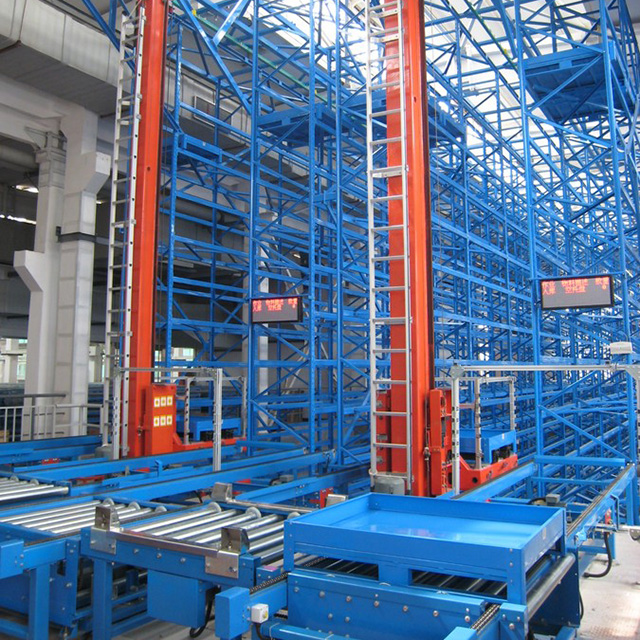
Automated Storage and Retrieval Systems (ASRS) operate at blistering speeds and immense heights. This intense environment makes the structural integrity of the racking system a critical single point of failure. If the framework falters, the entire operation grinds to a halt. System buyers routinely focus on software and robotics. Yet, the manufacturing method of the physical infrastructure dictates long-term uptime. Specifically, how beams and uprights join together matters immensely. Manual joints often harbor microscopic flaws. These flaws expand under repetitive stress. Automatic welding is not just a manufacturing efficiency metric for vendors. It serves as a critical baseline for buyers. You need it to ensure the strict tolerances, dynamic load capacities, and structural reliability required by modern facilities. You will learn how robotic manufacturing eliminates human variance. We will explore the mechanics behind optimized heat zones and uniform penetration. Finally, you will discover how to evaluate vendors for structural compliance.
Precision dictates uptime: High-speed shuttles and cranes require millimeter-level alignment; automatic welding eliminates the human-induced variance that causes equipment jams.
Strength through consistency: Robotic welding ensures uniform heat distribution and deeper weld penetration, critical for managing the dynamic stress of continuous ASRS operations.
Easier compliance and traceability: Automated processes generate verifiable data, simplifying adherence to RMI (Rack Manufacturers Institute) and international structural safety standards.
High-bay storage environments demand absolute mechanical perfection. Installations fail rapidly when structural deviations occur. Even minor warping causes automated shuttles to bind on their tracks. Stacker cranes misalign during high-speed retrievals. Optical sensors read false positives due to slightly tilted beams. These mechanical errors paralyze modern fulfillment centers. You cannot ignore the root cause of these disruptions. ASRS racking requires extreme geometric stability to function correctly.
Dynamic load challenges present a massive engineering hurdle. High-bay storage subjects the structural framework to constant kinetic energy. Moving automation creates relentless vibrations. Heavy pallets shift continuously during loading cycles. Manual joints remain inherently vulnerable in these aggressive environments. They suffer from material fatigue. They lack true consistency. Repetitive kinetic stress quickly exposes micro-cracking inside these weak structural connections. Once a crack starts, it propagates rapidly across the beam.
Human welders experience inevitable physical fatigue. Even highly skilled operators cannot maintain perfect consistency during long shifts. Awkward joint angles exacerbate this human limitation. This fatigue leads to significant manufacturing variance. Weld bead size fluctuates unpredictably. Heat application becomes highly uneven across different production shifts. Penetration depth varies dramatically across thousands of structural joints. Ultimately, this human variance increases the risk of out-of-tolerance components. You simply cannot afford these unpredictable flaws.
Operators often rely on simple visual inspections. Visual checks cannot detect internal voids. They routinely miss poor root penetration. These hidden defects act as ticking time bombs. A sudden joint failure triggers immediate emergency protocols. Entire warehouse zones shut down abruptly. Maintenance crews struggle to realign twisted automation tracks. We must eliminate these variables at the factory level.
Robotic precision fundamentally changes the structural strength of warehouse frameworks. It optimizes Heat-Affected Zones (HAZ) flawlessly. Manual over-welding often causes severe metallurgical degradation. Excessive heat weakens the surrounding high-tensile steel. It alters the granular structure of the metal. Automatic processes apply exact, strictly controlled heat. They move at highly precise speeds. This prevents the base material from losing its native tensile strength. The surrounding metal retains its engineered load-bearing properties.
Uniform joint penetration acts as another massive structural advantage. Robotic systems maintain a constant travel speed along the seam. They keep a steady, uninterrupted wire feed rate. This ensures the filler material fuses completely. It bonds perfectly to the base metal of uprights and beams. Deep, consistent fusion maximizes the overall load-bearing capacity. You never worry about shallow root passes. The automation guarantees total joint integration across every single beam.
These automated joints resist dynamic fatigue exceptionally well. They eliminate dangerous stress concentrators entirely. Manual fabrication often leaves undercuts or uneven bead profiles. These imperfections act as focal points for structural stress. Automated machinery provides a smooth, uniform transfer of kinetic forces. This smooth force distribution remains strictly critical for continuous operations. Quality automatic welding ASRS racking delivers the exact mechanical reliability required to support constant movement. Your infrastructure absorbs vibrations without accumulating structural damage.
Structural Comparison Chart: Manual vs. Automatic Fabrication | ||
Performance Metric | Manual Fabrication | Automatic Robotic Fabrication |
|---|---|---|
Heat Application | Variable; high risk of metallurgical degradation | Exact; preserves base metal tensile strength |
Penetration Depth | Inconsistent across different shifts | Uniformly deep and continuous |
Fatigue Resistance | Vulnerable due to uneven bead profiles | Highly resistant; smooth force distribution |
Scalable Consistency | Low; degrades due to operator fatigue | Extremely high; mathematically repeatable |
High-speed automation relies on strict geometry. Repeatability at scale is absolutely mandatory. A typical storage facility requires tens of thousands of structural connections. Robotic manufacturing guarantees exact uniformity. The ten-thousandth beam matches the first one exactly. This massive scale leaves no room for human error. You need mathematically perfect components to support sensitive robotic shuttles.
Precise volume control also mitigates structural deflection. Manual cooling phases often cause severe metal warping. Uneven heat distribution twists the steel. Automated processes prevent this distortion entirely. Beams remain perfectly horizontal after the cooling phase. Uprights stay perfectly straight. This exactness directly prevents shuttle track misalignment. Your automation travels smoothly without binding or slowing down.
Furthermore, precision directly impacts integration timelines. Systems manufactured with robotic accuracy assemble much faster on-site. Plumb and square structures require fewer adjustments. Installation crews avoid excessive shimming. You eliminate on-the-fly modifications. This greatly accelerates the final system commissioning phase.
Consider the direct field advantages of this manufacturing precision. Installation teams follow specific commissioning steps much faster:
Rapid component alignment during initial tower assembly.
Elimination of on-site rework for warped or twisted beams.
Immediate, seamless compatibility with automated crane tracks.
Faster final safety sign-offs and dynamic load testing.
These accelerated steps save weeks of project time. Your facility goes live sooner. The automation performs optimally from day one.
Procurement teams must look beyond glossy marketing brochures. You must validate a vendor's technical claims carefully. Many suppliers advertise automated capabilities loosely. You need hard proof of their quality control frameworks.
Prioritize Non-Destructive Testing (NDT) capabilities heavily. Look for partners who pair robotic production with automated NDT. Ultrasonic or X-ray inspections verify internal joint integrity thoroughly. They examine the deepest parts of the connection. They accomplish this without damaging the physical product. This testing proves the absence of internal voids.
Common NDT Methods for Racking Verification | ||
Testing Method | Primary Detection Target | Best Application Scenario |
|---|---|---|
Ultrasonic Testing (UT) | Internal voids, lack of complete fusion | Deep root penetration verification |
Radiography (X-Ray) | Hidden cracks, porosity, inclusions | Volumetric joint inspection on critical beams |
Magnetic Particle | Surface and near-surface micro-cracks | Rapid surface integrity checks post-cooling |
Traceability provides another critical evaluation checkpoint. Automated machinery logs essential parameters for every single batch. They record voltage, current, and exact travel speed. Buyers should require this documentation upfront. It proves absolute compliance with ISO, EN, or RMI standards. A reputable vendor hands this data over willingly.
Finally, evaluate specific material compatibility. Ensure the robotic lines are calibrated for high-tensile steel grades. Heavy-duty environments require very specific steel alloys. The machinery settings must match the metallurgy perfectly. Improperly calibrated machines ruin high-tensile steel.
Request documented proof of internal NDT testing capabilities.
Review sample batch logs showing voltage and current data.
Verify specific calibration settings for high-tensile steel components.
Confirm the vendor directly owns the robotic manufacturing lines.
Strategic procurement requires looking past initial price tags. Advanced production methods often carry a higher upfront capital expenditure. This stems from the vendor's heavy machinery overhead. However, it drastically lowers the risk of operational downtime. It also reduces future structural maintenance needs. You buy long-term stability.
Risk mitigation remains a primary executive focus. A localized failure in an automated high-bay facility triggers exponential damage. You face more than just simple rack replacement. A structural collapse ruins valuable inventory immediately. It severely damages expensive moving robotics. It forces massive facility downtime. You lose fulfillment capabilities for weeks. Mitigating this risk justifies premium manufacturing.
Apply strict shortlisting logic when comparing supplier bids. Audit the vendor's manufacturing facility thoroughly. You can do this physically or virtually. Prioritize partners who own their robotic lines outright. Avoid suppliers who outsource fabrication to third-party manual shops. You lose quality control when production leaves the primary facility. Direct oversight guarantees the reliability you need.
Engineers must push for tighter RFP specifications. Vague requirements invite substandard manual fabrication. Detailed mandates force vendors to elevate their production standards. Specify the exact codes they must follow. Demand continuous data logging. Refuse bids lacking comprehensive quality assurance frameworks. Your proactive stance protects the entire automation investment.
The reliability of an automated warehouse directly reflects the precision of its physical framework. Advanced manufacturing delivers exactness and durability. Manual methods simply cannot guarantee these traits at a massive scale. You must prioritize structural integrity over superficial savings. Poor joints inevitably fail under constant dynamic loads. Robotic exactness prevents this.
Eliminate Variance: Embrace robotic manufacturing to ensure perfect geometric alignment for high-speed shuttles.
Demand NDT Data: Always require X-ray or ultrasonic testing logs to verify internal joint integrity.
Audit Facilities: Partner exclusively with vendors who directly own and operate their automated production lines.
Update Specifications: Procurement and engineering teams must mandate detailed manufacturing requirements in their next system RFP.
Take action before finalizing your next facility expansion. Review your current vendor compliance documents today. Upgrade your engineering specifications immediately. Ensure your framework matches the sophistication of your robotics.
A: No. While it mathematically reduces defect probabilities and improves fatigue resistance, overall structural integrity relies on system design. You must ensure correct steel gauge selection and adhere strictly to load capacity limits. Robotic exactness prevents manufacturing flaws, but operational abuse or severe overloading can still cause catastrophic damage.
A: Initial prices can be slightly higher due to the premium manufacturing process. However, the drastic reduction in installation time offsets this premium. Tighter structural tolerances mean much faster assembly. Furthermore, you face significantly lower maintenance expenses and fewer realignments during early operations, making the upfront investment highly practical.
A: Yes. While the original manufacturing uses robotics, certified structural welders can perform localized repairs on-site. They must follow strict engineering guidelines. This ensures they maintain the required geometric tolerances. Any repair must match the exact structural integrity of the original automated joint to prevent future automation jams.
A: Look for AWS (American Welding Society) D1.1 compliance. You should also require R-Mark certification from the Rack Manufacturers Institute (RMI). Finally, insist on ISO 9001 for automated quality management systems. These certifications prove the vendor adheres to the strict safety and traceability standards required for automated facilities.