- All
- Product Name
- Product Keyword
- Product Model
- Product Summary
- Product Description
- Multi Field Search

Views: 0 Author: Site Editor Publish Time: 2026-06-21 Origin: Site
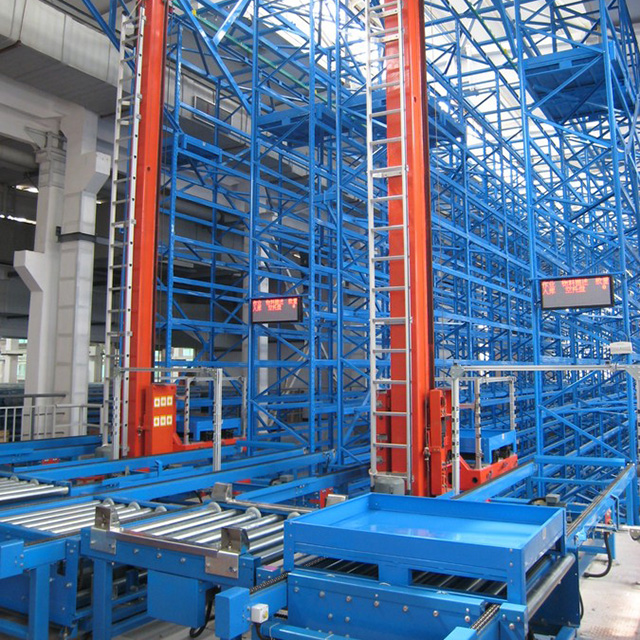
Imagine launching a massive warehouse automation project. The software is flawless. The robots are fast. Yet, operations constantly halt. Why? The physical framework underneath everything failed. heavy duty ASRS racking is not just passive storage. It serves as the critical physical infrastructure. It dictates the reliability of your entire multi-million-dollar automation investment. Standard pallet racks consistently fail in automated environments. They simply lack the strict manufacturing tolerances required for robotics. Even a few millimeters of deflection can trigger stacker crane faults. These errors damage goods and halt throughput entirely.
This article provides a clear technical evaluation framework. We wrote it specifically for warehouse operators and facility engineers. You will learn how to successfully evaluate and select robust racking structures for both unit-load and complex palletized applications.
Tolerance is Non-Negotiable: Heavy duty ASRS racking requires significantly stricter engineering and manufacturing tolerances than traditional racking to prevent robotic interface failures.
Architecture Dictates CapEx: Choosing between a rack-supported building (silo) and a free-standing indoor system fundamentally alters project timelines, tax implications, and ROI.
Integration is the Primary Risk: Successful deployment hinges on the alignment between the racking manufacturer, the robotics vendor, and the facility’s concrete slab specifications.
Standard storage racks support manual forklift operations. Operators visually adjust their approach to correct slight misalignments. Automated systems cannot do this. They rely on laser precision.
The tolerance gap between standard and automated racking is vast. Conventional racks tolerate minor sway and plumbness deviations. Automated environments demand absolute rigidity. A stacker crane traveling at high speed expects the pallet location to be exact within millimeters. Excessive deflection or rack sway blinds the crane sensors. This instantly triggers safety faults and stalls operations.
Dynamic loading separates standard structures from automated infrastructure. Standard racks handle static weight. Forklifts place pallets and back away. Conversely, automated environments introduce severe dynamic kinetic forces. Stacker cranes and autonomous shuttles move rapidly. They accelerate and brake violently. These actions transfer immense kinetic energy directly into the steel frame. Standard racks buckle under this repetitive dynamic stress. Specialized racks use engineered profiles to absorb these forces safely.
Misalignment carries a severe financial cost. You face frequent sensor faults. Pallet shuttles jam in their lanes. The drive motors on crane masts suffer accelerated wear. These mechanical failures create compounding downtime. Ultimately, sub-par steel infrastructure cripples your daily throughput.
Choosing the right structural configuration shapes your entire project. It impacts construction timelines, capital expenditure, and operational flow.
In a rack-supported building, the racking serves a dual purpose. It stores goods. It also acts as the primary structural frame for the facility. Contractors attach the roof and exterior wall cladding directly to the steel rack grid. This eliminates the need for independent structural columns.
These structures offer massive economic advantages for new constructions. They are ideal for greenfield projects. You can achieve maximum vertical space utilization. RSBs frequently exceed 40 meters in height. Additionally, they often classify as equipment rather than real estate. This classification can provide lucrative accelerated depreciation tax benefits for the business.
Free-standing indoor systems sit inside a traditional building shell. They operate independently from the primary building structure. The facility provides the roof and walls. The rack system simply occupies the interior volume.
This configuration works best for brownfield retrofits. Facility engineers must navigate strict existing constraints. You must route automated aisles around existing structural building columns. Ceiling height limitations strictly cap your vertical storage density. Most importantly, the existing floor slab must possess adequate load-bearing capacity to support high-density storage point loads.
Configuration | Best Use Case | Height Limits | Structural Foundation |
|---|---|---|---|
Rack-Supported Building (RSB) | Greenfield / New Builds | 40+ Meters | Custom engineered slab for integrated load |
Free-Standing Indoor | Brownfield / Retrofits | Limited by existing ceiling | Relies on existing slab capacity |
Evaluating vendor proposals requires looking past the surface. You must scrutinize the raw material and the engineering specifics. We recommend assessing four critical features before making a vendor selection.
Steel Grade and Material Quality: Your system must handle immense weight. Individual unit-loads often range from 1,000kg to over 3,000kg per pallet. You need high-tensile steel. Using thicker, low-grade steel increases the structural footprint. This sacrifices valuable pallet positions. High-tensile steel provides strength while maintaining a slim structural profile.
Surface Treatment Options: The environment dictates the finish. Epoxy powder coating offers excellent durability for ambient warehouses. It resists scratches and impacts. However, cold storage or high-humidity facilities require hot-dip galvanizing. This zinc coating penetrates the steel. It prevents catastrophic rust caused by constant temperature fluctuations and condensation.
Seismic and Wind Load Engineering: ASRS racking must survive nature. Structural engineering compliance is hyper-localized. Engineers must design the frame to flex safely during regional seismic events. For rack-supported buildings, external wind and snow loads apply tremendous lateral pressure to the structure. The design must offset these external forces.
Crane and Shuttle Interfacing: The hardware dictates integration success. Automation vendors require specific structural interfaces. Look for precision guide rails for stacker cranes. Ensure the design features reinforced baseplates to distribute ground pressure. Specialized pallet support profiles guarantee smooth robotic hand-offs.
Certain industries reap massive benefits from automated high-density storage. They use these systems to solve specific operational bottlenecks.
Cold Storage and Deep-Freeze Facilities: Energy is the largest operating expense in cold storage. High-density automation minimizes the cubic footprint of the building. A smaller volume requires drastically less refrigeration. This structural efficiency slashes ongoing energy costs.
FMCG and Food & Beverage Distribution: These sectors demand extreme throughput. Shuttle-based racking systems excel here. They optimize high-turnover pallet flows. You can configure them for precise first-in-first-out (FIFO) or last-in-first-out (LIFO) inventory management.
Heavy Manufacturing and Automotive Buffers: Industrial components pose unique challenges. They feature irregular weights and oversized footprints. Custom heavy-duty racking profiles secure these unwieldy unit-loads. They safely buffer heavy raw materials right beside the production line.
Project failures rarely stem from the robotics alone. They usually originate from poor physical integration. Understanding these risks protects your timeline.
The foundation is the most common point of failure. Concrete slab specifications demand strict attention. Automated systems exert massive concentrated point loads on the floor. Facility floors must meet stringent TR34 flatness standards. If the slab lacks the required thickness or compressive strength, it will crack. A sagging floor permanently misaligns the entire vertical structure above it.
Fire suppression integration introduces major complexities. High-density storage blocks overhead sprinkler coverage. You must route complex in-rack sprinkler systems directly through the steel grid. Planners must align these pipes without obstructing shuttle pathways. Navigating local fire codes requires early collaboration between your racking vendor and a certified fire engineer.
Vendor silos destroy automation projects. The racking manufacturer builds the steel. The automation integrator installs the robots. If they do not communicate, the interfaces will fail. We warn strongly against disjointed vendor management. Advocate for a single-source provider. Alternatively, mandate a highly collaborative project management approach. Every millimeter of tolerance must be mutually agreed upon before manufacturing begins.
Implementation Risk | Common Consequence | Mitigation Strategy |
|---|---|---|
Inadequate Concrete Slab | Uneven settling; crane mast misalignment | Conduct core testing; adhere strictly to TR34 standards |
Poor Fire Code Planning | Delayed occupancy permits; costly rework | Design in-rack sprinkler routing during CAD phase |
Vendor Silos | Hardware interface incompatibility | Enforce joint engineering reviews before sign-off |
Selecting the right manufacturing partner mitigates structural risks. Use this specific framework to evaluate potential vendors.
Prioritize engineering autonomy. Choose manufacturers possessing robust in-house structural engineering teams. Some vendors outsource their load calculations to third-party firms. This fragments responsibility. In-house engineers understand their specific steel profiles intimately. They model dynamic kinetic forces more accurately. They react faster to custom automation requirements.
Demand a verifiable track record. Initial cost estimates tell you very little. Ask vendors for detailed case studies. Request post-installation tolerance audits from their previous builds. You want to see long-term deflection metrics. A superior partner proves their structures maintain rigid plumbness five years after installation.
Your next steps require action. Do not commit to an automation vendor blindly. Initiate a comprehensive facility audit first. Request a preliminary structural feasibility study. Understand your slab capacity and vertical constraints immediately. This proactive data gives you leverage during final contract negotiations.
Deploying an automated warehouse demands absolute structural perfection. You are not buying commodity storage. You are investing in a highly specialized structural engineering discipline. Your framework must withstand relentless dynamic forces, extreme payloads, and strict environmental constraints.
Ultimately, the reliability of your entire facility relies directly on the integrity of the steel framing it runs on. If the racking deflects, the robotics halt. It is that simple. Prioritize precision materials, seamless vendor integration, and rigorous foundation planning.
Do not leave your automation success to chance. Contact an engineering consultant today. Request a comprehensive site assessment to definitively evaluate your facility's readiness for automated integration.
A: Generally, no. Standard racks lack the strict manufacturing tolerances, rigidity, and specialized rail interfaces required for automated cranes or shuttles. Attempting a retrofit often costs more in custom engineering and operational downtime than installing purpose-built ASRS racking.
A: Free-standing indoor systems are limited by the existing building ceiling. Rack-supported buildings (RSBs) regularly exceed 40 meters (130+ feet), limited primarily by local zoning laws and the capabilities of the automated stacker cranes.
A: Sub-zero temperatures can cause standard steel to become brittle. Heavy duty ASRS racking in cold storage requires specific cold-resistant steel alloys and hot-dip galvanized finishes to prevent rust from condensation during temperature fluctuations.