- All
- Product Name
- Product Keyword
- Product Model
- Product Summary
- Product Description
- Multi Field Search

Views: 0 Author: Site Editor Publish Time: 2026-06-23 Origin: Site
Think of automated storage not just as shelves, but as a living machine. When you build a smart warehouse, the structure holding everything together becomes critical. It acts as the backbone of your entire operation. Upgrading to automation involves massive stakes. If you rely on standard rack tolerances, you risk catastrophic robotic integration failures. Minor misalignments lead to systemic breakdowns, severe crane collisions, or excessive system downtime. You simply cannot afford these operational disruptions. The purpose of this article is to provide a realistic, engineering-first framework. We will help you evaluate and select custom ASRS racking perfectly aligned to your facility constraints. You will learn how to match racking architecture directly to your specific throughput goals. This guide ensures your automation systems operate flawlessly, scale predictably, and maintain peak speeds.
Custom ASRS racking requires strict manufacturing and installation tolerances to ensure seamless interaction with Storage and Retrieval Machines (SRMs) and shuttles.
The choice between unit-load, mini-load, and rack-supported structures depends entirely on load profiles, available footprint, and greenfield vs. brownfield deployment.
Successful implementation requires assessing hidden risks upfront, including concrete slab flatness (FF/FL), seismic compliance, and in-rack fire suppression integration.
Selecting a manufacturing partner requires evaluating their engineering transparency, track record with leading automation integrators, and post-installation support.
Traditional pallet racks support static loads. Human forklift operators handle these loads every day. Human drivers easily adjust for slightly crooked pallets. They can intuitively navigate uneven beams or slightly leaning frames. Automation systems lack this intuitive flexibility. Storage and Retrieval Machines (SRMs) and robotic shuttles operate blindly. They rely entirely on millimeter-level precision to function correctly. If a shuttle expects a track edge precisely at a specific coordinate, a two-millimeter deviation triggers an immediate fault. This stark contrast highlights why standard frames fail miserably in smart logistics centers. Automation demands absolute rigidity.
The cost of structural inaccuracy compounds rapidly. Minor deflections or plumbness errors trigger cascading mechanical effects across the warehouse. The most immediate result is usually an automated crane fault. Sensitive optical sensors detect spatial anomalies. They instantly shut the system down to prevent catastrophic crashes. Jammed shuttles require highly dangerous manual interventions. Maintenance personnel must climb deep inside high-density aisles to reset the robots. Furthermore, slightly misaligned guide rails cause accelerated wear on robotic drive wheels. You will replace expensive robotic parts much faster than anticipated. Subpar steel tolerances ultimately drain your maintenance budget.
So, what does operational success actually look like? First, you must achieve zero-fault integration between the steel structures and the automation software. The hardware must perfectly match the digital twin. Second, successful implementations optimize vertical space utilization safely. You capture every possible inch of clear height. Finally, success requires structural scalability. Your framework must handle future throughput increases safely. You should be able to run shuttles at higher velocities later without inducing structural fatigue. Building a robust foundation now guarantees seamless operations tomorrow.
Selecting the right structural configuration dictates your entire operational flow. Different load profiles demand entirely different engineering approaches. Below, we explore the primary configurations defining modern smart warehouses.
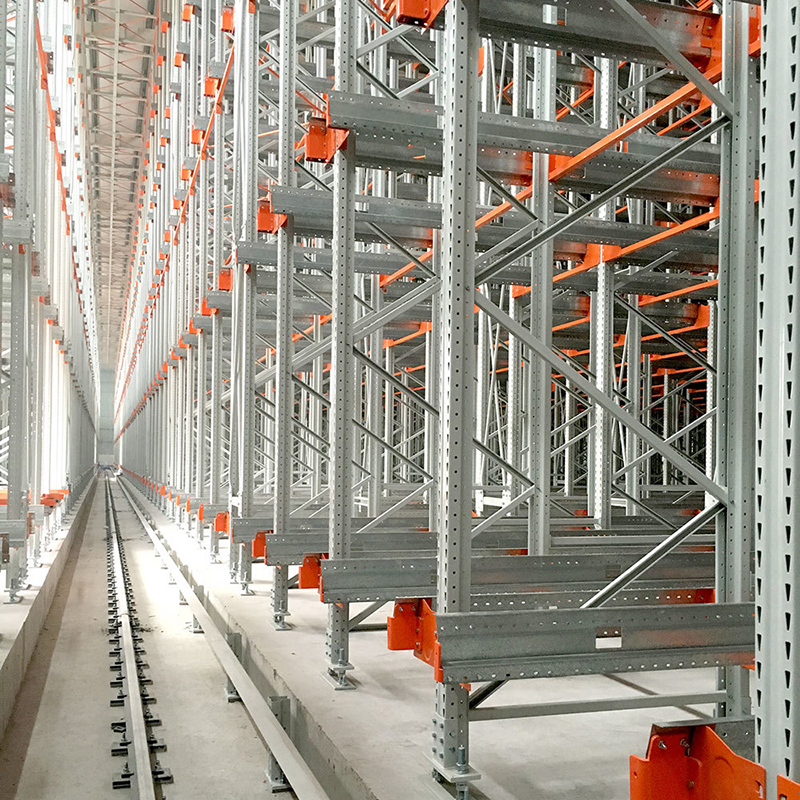
You use unit-load configurations for heavy pallets and massive bulk reserves. These systems handle loads exceeding 1,000 kilograms per pallet. Engineering these structures requires substantial focus on deep-lane configurations. Heavy loads exert immense static pressure on the uprights. High-bay verticality pushes the limits of steel column strength. Designers must calculate exact buckling thresholds for towering frames. You must integrate specialized load-bearing consoles. These consoles allow heavy-duty stacker cranes to deposit pallets flawlessly. A robust unit-load setup ensures dense, high-capacity storage for heavy manufacturing or beverage distribution centers.
Mini-load layouts handle lighter, highly dynamic inventory. They are best for cartons, plastic totes, and high-speed e-commerce fulfillment operations. Speed dictates the structural requirements here. Shuttles dart across levels at extreme velocities. Therefore, you need custom track profiles perfectly extruded for specific robotic wheels. Pitch adjustments must be highly granular. Engineers rely on lighter-gauge, high-tensile steel for these systems. High-tensile materials minimize the overall dead weight of the structure. Simultaneously, this steel resists the high-frequency vibrations caused by dozens of fast-moving shuttles. Precision roll-forming guarantees every track aligns flawlessly.
Rack-supported buildings merge the warehouse shelter directly into the storage structure. The racking acts as the building's main structural frame. It bears the load of both the roof and the exterior wall cladding. This approach delivers a massive return on investment. You eliminate the need for traditional structural building columns. Every square foot is dedicated entirely to dense storage.
Clad-rack systems are ideal for specific scenarios. They dominate greenfield projects where developers build entirely from scratch. They also excel in high-bay setups exceeding standard municipal warehouse height limits. Traditional buildings rarely exceed 40 feet efficiently. Clad-rack designs easily reach 100 feet or more. You maximize sheer volume while drastically reducing traditional construction timelines and material costs.
Configuration Type | Ideal Load Profile | Key Engineering Focus | Best Deployment Scenario |
|---|---|---|---|
Unit-Load | Heavy pallets (>1,000 kg) | Buckling thresholds, high-bay column strength | Beverage, heavy manufacturing, cold storage |
Mini-Load / Shuttle | Cartons, totes (<50 kg) | High-tensile steel, exact track profiles | E-commerce fulfillment, spare parts |
Rack-Supported (Clad-Rack) | Maximized vertical density | Roof/wall bearing loads, wind shear resistance | Greenfield sites, extreme high-bay needs |
Evaluating your structural infrastructure requires moving beyond basic load capacities. You must analyze the dynamic relationship between the steel and the robotics. Failing to mandate strict evaluation criteria invites operational disaster. Ensure you assess the following technical benchmarks.
Precision Engineering and Deflection Limits: Acceptable tolerance thresholds for automated environments are exceptionally tight. You must define exact limits for structural sway. When a three-ton crane stops abruptly, the steel frame absorbs the kinetic energy. Deflection limits under these dynamic robotic loads must remain within a few millimeters. Excessive sway causes the cranes to misread rack positions.
Seismic and Dynamic Load Compliance: You cannot use generic engineering models. Location-specific engineering is an absolute necessity. Your ASRS racking must safely absorb continuous crane acceleration and deceleration forces. Furthermore, it must strictly comply with local seismic building codes. Seismic zones require specialized base plates, robust diagonal bracing, and reinforced column profiles to prevent catastrophic collapse.
Hardware and Automation Compatibility: The physical framework must interface perfectly with your Warehouse Management System (WMS) and Warehouse Control System (WCS). Software assumes the physical world is perfect. Custom structures achieve this perfection via perfectly aligned hardware components. Guide rails, optical sensors, and positioning brackets must mount flawlessly. Misaligned brackets confuse the WCS, resulting in continuous system re-routing.
Surface Treatment and Durability: Do not overlook coating quality. High-friction zones experience relentless physical interaction. You must specify impact-resistant coatings. Epoxy powder coats or specialized hot-dip galvanization protect critical connection points. Durable surface treatments prevent rust, minimize friction wear, and extend the lifespan of moving shuttle components.
Even the most perfectly engineered steel will fail if the surrounding environment is flawed. Facility managers often discover hidden integration risks too late. You must acknowledge the physical realities of the site before pouring concrete or assembling frames. Anticipating these hurdles guarantees a smoother integration.
The concrete floor remains the most common point of failure in any automation project. High-bay systems magnify tiny floor imperfections. A one-millimeter slope at the floor translates to a ten-millimeter deviation sixty feet in the air. You must understand FF (Flatness) and FL (Levelness) requirements. Standard warehouse floors rarely meet automation standards. High-bay cranes typically require super-flat F-min certified slabs. If your current floor dips, the stacker crane will lean. This leaning causes immediate laser alignment faults. Fixing a bad slab after rack installation is nearly impossible. Always audit and grind the concrete before erecting the first upright.
Fire safety compliance aggressively competes with dense storage goals. Automated warehouses store highly combustible materials in deeply packed aisles. Mandatory sprinkler systems require careful spatial planning. You must integrate complex pipe networks directly inside the steel framework. The challenge lies in placing these pipes without compromising shuttle pathways. Planners must map out specific flue spaces. If engineers design the rack without consulting fire suppression experts, you face massive redesign costs. A smart design routes water lines safely behind uprights, protecting them from robotic collisions.
The operational realities of installation vary drastically based on your facility status. Erecting custom frames in an existing brownfield facility requires surgical precision. You must implement phased rollouts. This allows partial inventory operations to continue while builders erect new aisles behind protective barricades. Conversely, greenfield new builds offer faster timelines but demand strict contractor synchronization. Realistically, staging areas for massive steel shipments take up vast amounts of space. Coordinate delivery schedules strictly to avoid yard congestion. Clear communication between the steel erectors and the robotics integrators prevents costly delays.
Hidden Risk Factor | Immediate Impact | Actionable Mitigation Strategy |
|---|---|---|
Inadequate Slab FF/FL | High-altitude crane sway, sensor faults | Conduct pre-installation laser surveys; perform targeted concrete grinding. |
Fire Code Conflicts | Lost storage positions, failed safety audits | Co-design racking flues with fire engineers before finalizing CAD models. |
Brownfield Congestion | Operational delays, severe staging bottlenecks | Mandate a phased zone-by-zone installation timeline. |
You are not buying commodity steel off a shelf. You are commissioning a high-stakes engineering project. Selecting the right manufacturing partner makes or breaks your automation strategy. Evaluate potential vendors ruthlessly against their technical capabilities and industry footprint.
Always look for manufacturers employing robust in-house structural engineering teams. Outsourced engineering often leads to disjointed communication. Ask about their production floor. They must operate automated roll-forming production lines. Manual pressing or older fabrication methods cannot guarantee consistent millimeter precision across thousands of beams. Automated lines eliminate human error during fabrication. Inspect their quality assurance protocols. They should test raw steel batches for tensile strength before ever shaping a column.
Emphasize the importance of integrator agnosticism. A premier racking manufacturer should have a proven track record collaborating with various global automation brands. They should understand the subtle mechanical differences between a Kardex shuttle, a Dematic crane, and an SSI Schaefer mini-load system. A manufacturer tied exclusively to one robotics brand limits your future flexibility. Agnostic partners adapt their steel profiles to fit your preferred software and hardware ecosystem perfectly.
Before you ever request a quote or an initial consultation, gather your baseline data. Thorough preparation speeds up the design phase dramatically. Use the following checklist to prepare your procurement packet:
Document Load Dimensions: Record the exact maximum weight, width, depth, and height of your pallets or totes.
Define Throughput Targets: Calculate your required picks per hour and total daily storage movements.
Provide Facility Blueprints: Share CAD drawings showing building columns, dock doors, and exact clear ceiling heights.
Compile Seismic Zone Data: Identify local municipal building codes and historical seismic risk parameters for your exact ZIP code.
Confirm Fire Suppression Rules: Gather initial guidelines from your local fire marshal regarding required flue spaces.
Upgrading to automation completely transforms modern logistics. However, remember that custom framing remains a high-stakes engineering project. It is absolutely not a simple commodity purchase. You cannot place highly intelligent, ultra-fast robotics onto poorly manufactured steel and expect success. The precision of the physical infrastructure dictates the success of the digital workflow.
A flawless structural foundation immediately mitigates long-term operational risk. By prioritizing millimeter-level tolerances, you prevent crane collisions, eliminate sensor errors, and drastically reduce maintenance downtimes. Ultimately, investing in the right steel skeleton maximizes the financial return of your advanced robotics software. Superior framing lets your robots run faster, safer, and longer.
Do not leave your automation integration to chance. Protect your robotic investments by securing the proper physical framework today. Promptly schedule a technical consultation or request a comprehensive site audit from an experienced structural engineering team to guarantee your project's success.
A: Traditional racking supports static loads handled by humans with broad tolerances. ASRS frames utilize significantly tighter manufacturing tolerances to accommodate blind robotic sensors. They feature heavier steel gauges, custom guide rails, and specialized bracing. These enhancements safely absorb the continuous, dynamic load-bearing forces exerted by high-speed automated cranes and shuttles.
A: Costs fluctuate heavily based on specific project constraints. You cannot rely on a flat rate. Total height, local seismic engineering requirements, and maximum load weights drastically drive the price. Additionally, integration complexity, special surface treatments, and current global raw steel costs impact the final per-position calculation. Always request a custom engineering quote.
A: Honestly, engineers rarely recommend retrofitting traditional racks for high-speed automated cranes. Existing structures suffer from undocumented structural fatigue. They also lack the rigorous manufacturing tolerances required for seamless robotic integration. However, simple floor-level AMR (Autonomous Mobile Robot) or AGV (Automated Guided Vehicle) integrations sometimes serve as rare, cost-effective exceptions.
A: The timeline heavily depends on scale. Initial engineering and structural design typically take four to eight weeks. Raw material procurement and automated manufacturing require another eight to twelve weeks. Finally, on-site assembly and integration staging add an additional four to ten weeks. Expect a complete cycle to last six to nine months.