- All
- Product Name
- Product Keyword
- Product Model
- Product Summary
- Product Description
- Multi Field Search

Views: 0 Author: Site Editor Publish Time: 2026-07-30 Origin: Site
Storing oversized, heavy materials outdoors exposes structural steel to severe environmental degradation, making the surface finish as critical as the steel gauge itself. Selecting an inadequate finish for outdoor storage leads to accelerated oxidation, compromised structural integrity, safety hazards, and premature replacement of capital equipment. When you place heavy materials in the elements, the steel framework faces constant attacks from moisture, ultraviolet radiation, and mechanical impacts. The right protective coating stands between reliable long-term storage and catastrophic structural failure. We will establish a technical framework for evaluating hot-dipped galvanized, powder-coated, and painted finishes based on climate severity and mechanical wear.
Hot-Dipped Galvanized (HDG) is the industry standard for fully exposed outdoor environments due to its metallurgical bond and sacrificial cathodic protection.
Powder coating offers a viable, cost-effective alternative only for semi-enclosed or covered outdoor applications (e.g., T-sheds) where direct precipitation is mitigated.
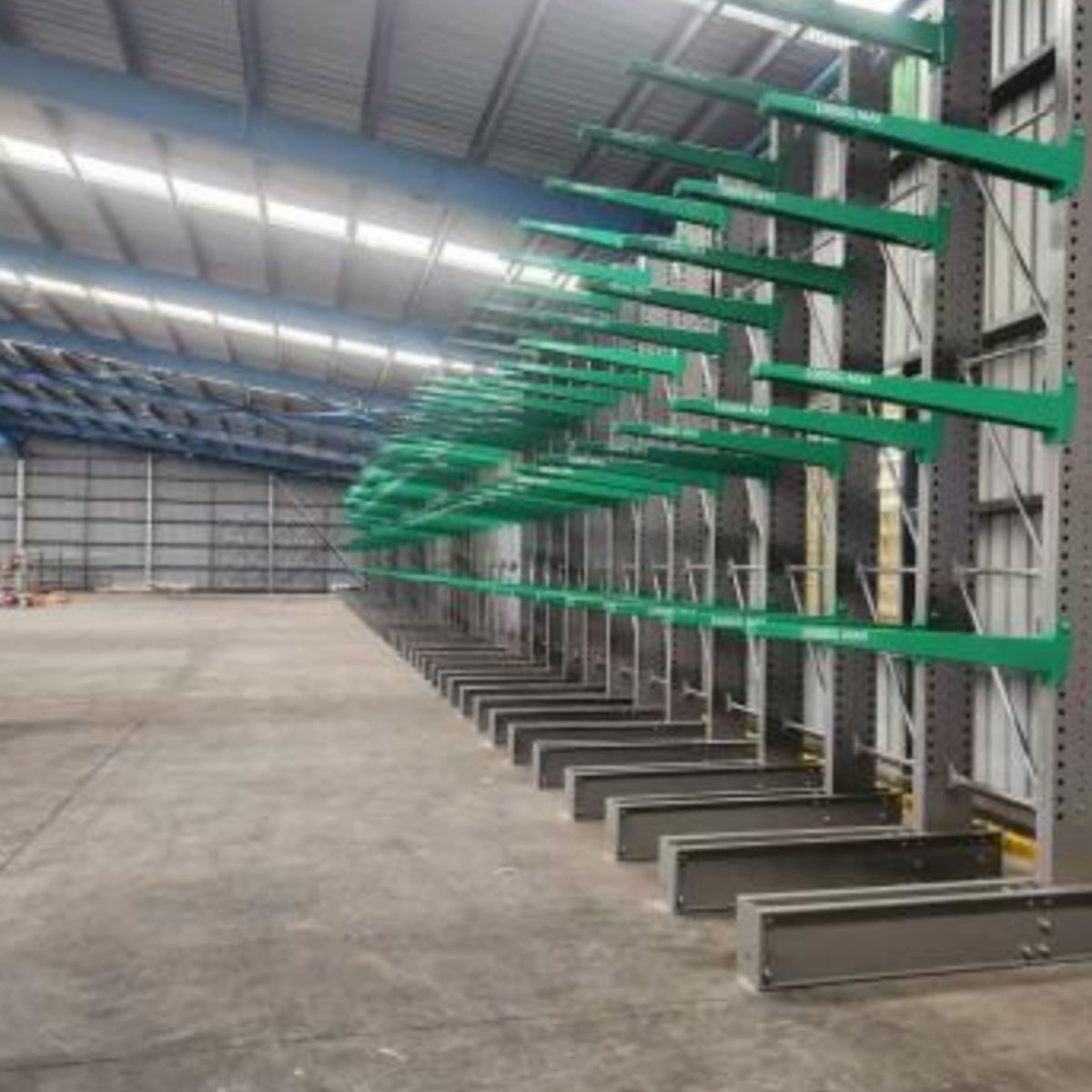
The absence of front vertical columns on long load cantilever racks improves accessibility but drastically increases the frequency of forklift side-swipes, making high-impact finish durability a necessity.
Mechanical abrasion from long loads (lumber, steel pipes) accelerates finish degradation; the chosen finish must withstand continuous scraping without exposing bare steel.
Continuous moisture, freeze-thaw cycles, and UV radiation relentlessly degrade steel storage systems. Rain and snow introduce water into every joint, while fluctuating temperatures cause condensation to form inside tubular components. Ultraviolet radiation breaks down the chemical bonds in standard paints, causing them to chalk and flake away. This exposure leaves the underlying steel completely vulnerable to the elements. In a typical lumber yard or pipe distribution center, the racking systems are subjected to 365 days of weather exposure, meaning any weakness in the surface coating will be exploited by the environment.
Coastal environments and industrial zones introduce accelerated corrosion risks. Saltwater spray carries chloride ions that rapidly penetrate weak surface coatings, while industrial zones often produce acid rain that eats through standard paints. When surface rust is ignored, it eventually transitions into structural pitting. This pitting reduces the thickness of the steel components, directly causing a severe loss in load capacity and creating imminent safety hazards. A rack column that loses just a fraction of an inch of steel thickness to pitting can lose thousands of pounds of structural capacity.
Environmental Zone | Primary Stressors | Corrosion Risk Level | Impact on Steel Storage |
|---|---|---|---|
Coastal / Marine | Saltwater spray, high humidity, constant moisture | Extreme | Rapid chloride-induced pitting; rapid failure of non-galvanized steel. |
Heavy Industrial | Chemical exposure, acid rain, airborne particulates | High | Chemical degradation of paint and powder coats; accelerated oxidation. |
Arid / Desert | Extreme UV radiation, high temperature fluctuations | Moderate | Severe chalking and fading of paints; thermal expansion stress on coatings. |
Temperate / Continental | Freeze-thaw cycles, seasonal rain and snow | High | Ice expansion in joints; continuous moisture exposure during wet seasons. |
The open, front-columnless design of heavy duty cantilever racks increases the likelihood of forklift tines striking the arms and columns. Operators must maneuver large, awkward materials into tight spaces. Even highly skilled drivers occasionally bump the structural framework. These impacts easily chip brittle surface coatings, exposing the raw steel beneath to immediate oxidation. In a fast-paced yard, operators are focused on moving material quickly, and incidental contact with the rack structure is an unavoidable reality of daily operations.
Retrieving heavy, bound stock bundles exerts massive scraping forces on the storage arms. Steel pipe bundles and strapped lumber often feature sharp metal or plastic bands. As forklifts drag these loads across the arms, the bands slice through protective coatings. Loading and unloading heavy materials weighing 1,500 pounds or more per arm generates extreme friction and impact forces that test the limits of any surface finish. When a forklift operator tilts the mast to secure a load of steel beams, the friction generated against the rack arm can easily strip away standard wet paint in a single motion.
Different inventory types present unique abrasion profiles. Raw steel pipes create high-friction metal-on-metal contact. Rough-sawn lumber leaves behind moisture and splinters, while concrete forms introduce abrasive dust and heavy blunt force. Localized finish failure, such as scratches and gouges, allows moisture to penetrate. In inferior coatings, this leads to under-film corrosion, where rust spreads invisibly beneath the paint until large sections flake off. Understanding the specific abrasion profile of your inventory is critical when specifying the surface finish for your storage system.
The hot-dipped galvanizing process immerses steel in a bath of molten zinc, forming a series of zinc-iron alloy layers. This process complies with strict ASTM A123 standards. The resulting metallurgical bond integrates the coating directly into the steel. Zinc acts as a sacrificial anode, providing cathodic protection. If the surface of long load cantilever racks is scratched, the surrounding zinc will corrode before the underlying steel, preventing rust from taking hold. This self-healing property makes HDG uniquely suited for the heavy mechanical wear of outdoor material handling.
The primary advantage of HDG is maximum longevity, often exceeding 50 years in harsh environments. It requires zero maintenance and provides complete coverage, coating both the inside and outside of structural components. Tubular columns and arms are protected from internal condensation, a common failure point for painted racks. However, this finish results in a rougher aesthetic appearance. The dipping process can also leave zinc runs or spikes, which may require manual filing during installation to ensure flush connections between components.
Powder coating involves the electrostatic application of dry powder, followed by thermal curing to form a protective skin. For outdoor use, manufacturers utilize UV-resistant polyester or polyurethane blends, which differ significantly from standard indoor powder coats. These specialized blends resist fading and chalking under direct sunlight. The curing process creates a hard, durable shell that offers better impact resistance than standard wet paint, making it a popular choice for semi-exposed applications.
This finish provides excellent aesthetic options and good resistance to mild weathering. It is highly suitable for structures protected by a roof or canopy, such as T-sheds or drive-through lumber buildings. However, powder coating remains a barrier method. It is susceptible to chipping from heavy forklift impacts. Once the barrier is breached, moisture enters the scratch and causes rust to creep beneath the coating, a process known as undercutting. Over time, this undercutting causes large sheets of the powder coat to delaminate and fall off, exposing significant areas of raw steel.
Wet paint and epoxy coatings rely purely on liquid application to create a barrier over the steel. While these finishes represent the lowest initial capital expenditure and are easy to touch up on-site, they offer the least protection. Standard wet paint degrades rapidly under UV light, leading to chalking and fading. Within a few years of outdoor exposure, a painted rack will often look severely weathered and begin showing signs of surface rust at the welded joints and connection points.
These coatings exhibit high susceptibility to scratching and mechanical abrasion. Storing rough materials quickly strips the paint away. To prevent structural failure, painted outdoor racks require frequent maintenance, wire brushing, and recoating. This constant upkeep makes wet paint impractical for heavy-duty outdoor applications. The labor required to continuously sand and repaint a large outdoor racking system quickly negates any initial savings realized during the procurement phase.
Surface Finish | Protection Mechanism | Impact Resistance | Outdoor Longevity | Maintenance Required |
|---|---|---|---|---|
Hot-Dipped Galvanized | Metallurgical bond, cathodic protection | Excellent (Self-healing) | 30 - 50+ Years | None |
Exterior Powder Coat | Thermal cured barrier skin | Moderate (Can chip) | 10 - 15 Years (Covered) | Moderate (Touch-ups needed) |
Wet Paint | Liquid barrier | Poor (Scratches easily) | 3 - 5 Years | High (Frequent repainting) |
Severe exposure environments mandate hot-dipped galvanized finishes. If your facility is uncovered, located near the coast, or situated in a high-humidity region, galvanizing is the only reliable option. The constant presence of moisture and salt will destroy lesser coatings in a matter of months. Facilities storing heavy materials in these zones cannot afford to compromise on surface protection, as the structural degradation occurs too rapidly to manage with routine maintenance.
For moderate exposure, such as covered outdoor storage or arid climates, you can evaluate exterior-grade powder coating with zinc-rich primers. Indoor-to-outdoor transition zones require careful assessment. Loading docks often experience high condensation and temperature swings, necessitating a finish that can handle continuous moisture cycling. In these transition zones, the temperature differential between the cold steel and the warm, humid air causes heavy condensation, which will quickly rust a poorly coated rack.
Heavy duty outdoor applications requiring capacities of 1,500 pounds or more per arm demand structural cantilever racks built with I-beam construction. Structural steel offers the mass and rigidity necessary to support massive loads while withstanding wind and snow loads. Roll-formed steel is generally too thin for these extreme demands. When you are storing bunks of steel tubing or massive packs of engineered lumber, you need the heavy web thickness of structural I-beams to prevent deflection and twisting.
Hot-dipped galvanizing interacts differently with thick structural steel compared to thinner roll-formed steel. The intense heat of the zinc bath can cause thin roll-formed components to warp or twist. Structural steel absorbs this heat without deforming, resulting in superior adherence and a structurally sound final product. The galvanizing process actually strengthens the surface of the structural steel, creating an alloy layer that is harder than the base steel itself, providing exceptional abrasion resistance.
When integrating decking into your storage system, material selection is critical. Solid steel and wire mesh decking provide durable surfaces for small parts. Conversely, particle board or wood decking represents a catastrophic failure point outdoors. Organic decking retains moisture, leading to rapid rot and accelerated corrosion of the supporting steel arms. Wet wood resting directly on steel creates a permanent moisture trap that will rust through even thick steel over time.
You must prevent galvanic corrosion when mixing dissimilar metals. Placing unpainted steel or copper components directly onto galvanized racking causes a chemical reaction that degrades the finish. Ensure all decking finishes are metallurgically compatible with the rack frames. When storing highly abrasive materials, evaluate the need for protective arm liners made of polyurethane or UHMW to prevent finish damage. These liners act as a buffer, taking the brunt of the mechanical wear and protecting the underlying steel finish from the harsh scraping of raw materials.
Rust accumulation targets critical failure points on Heavy Duty Cantilever Racks. The arm-to-column connections and base plate welds endure the highest stress. When corrosion attacks these joints, the structural integrity of the entire system is compromised. Finish degradation directly alters the engineered load capacity of the rack, making it unsafe to store the original specified weights. A bolted arm connection that has rusted heavily may snap under a dynamic load, causing a cascading failure of the entire rack row.
Ignoring surface rust leads to deep pitting and metal loss. A rack designed to hold 2,000 pounds per arm may fail under half that weight if the steel thickness is reduced by severe oxidation. Regular inspections must identify and address finish failures before they threaten the structural core. Yard managers must train their forklift operators to report any significant impacts or deep gouges in the rack finish so that maintenance teams can apply cold galvanizing compound or touch-up paint immediately.
OSHA enforces a general duty clause requiring employers to maintain safe storage equipment. Visible rust and corrosion serve as immediate red flags during safety audits. Inspectors view severe oxidation as evidence of neglected maintenance and potential structural instability. If an inspector walks through a lumber yard and sees heavy flaking rust on the base plates of the cantilever racks, they will likely issue a citation and demand an immediate engineering review.
Significant rust accumulation triggers safety citations and mandates immediate structural engineering reviews. Facilities must often unload the affected racks, quarantine the area, and hire engineers to verify the remaining load capacity. Investing in the correct surface finish upfront prevents these costly compliance disruptions. The operational downtime required to unload, inspect, repair, and reload a rusted racking system far exceeds the initial cost of specifying a hot-dipped galvanized finish.
Hot-dipped galvanized finishes stand as the structurally sound choice for fully exposed, heavy-duty outdoor storage. Powder coating remains strictly reserved for covered, climate-protected outdoor structures where direct precipitation is eliminated. Selecting the right finish ensures your storage system survives decades of environmental abuse and mechanical wear.
To implement a successful outdoor storage strategy, follow these actionable steps:
Conduct a site-specific environmental audit to determine your exact exposure levels to moisture, salt, and industrial chemicals.
Consult with a structural racking engineer to specify the correct steel gauge and finish for your specific load requirements.
Implement a routine inspection schedule to identify and address minor finish damage before it leads to structural pitting.
Ensure all decking materials and stored inventory are metallurgically compatible with your chosen rack finish.
A: You should only use powder-coated racks outdoors if they are installed under a roof or canopy. You must specify UV-resistant powder blends to prevent fading. Fully exposed powder-coated racks will eventually chip, allowing moisture to cause under-film corrosion.
A: ASTM-compliant hot-dipped galvanized racks typically last 30 to 50 years in outdoor environments. The exact lifespan depends on the corrosivity of the specific environment, but the metallurgical bond provides decades of zero-maintenance protection.
A: Yes. Oxidation reduces the thickness of the steel components and compromises weld integrity. This structural degradation directly lowers the safe working load of the rack, creating a severe safety hazard.
A: Structural steel is superior for high capacities exceeding 1,500 pounds per arm. It withstands wind and snow loads effectively and is perfectly compatible with the high temperatures of the hot-dipped galvanizing process without warping.
A: Hot-dipped galvanized finishes are the best choice for outdoor lumber storage. Lumber retains high moisture content and splinters cause heavy abrasion during forklift loading, which galvanizing withstands better than any paint or powder coat.
A: You should use hot-dipped galvanized wire mesh or galvanized solid steel decking. Never use wood or particle board outdoors due to rapid rot. Matching galvanized decking to galvanized racks prevents galvanic corrosion.