- All
- Product Name
- Product Keyword
- Product Model
- Product Summary
- Product Description
- Multi Field Search

Views: 0 Author: Site Editor Publish Time: 2026-07-23 Origin: Site
Maximizing warehouse storage density often conflicts with operational velocity; the physical space between racks dictates both capacity and throughput. Specifying an incorrect aisle width for Selective Pallet Racking leads to either wasted expensive square footage or severe operational bottlenecks, increased rack damage, and safety hazards. When aisles are too wide, you burn through available footprint rapidly. When they are too narrow, forklift operators struggle to maneuver, slowing down pick rates and increasing the likelihood of catastrophic rack impacts. Establishing the correct aisle width requires a technical evaluation of material handling equipment (MHE), precise load dimensions, and specific operational success criteria. This guide breaks down the engineering and operational factors required to calculate exact aisle dimensions, ensuring your facility balances maximum storage density with safe, high-speed material handling.
Aisle width requirements are entirely dependent on the specific forklift type used: standard counterbalance (11'–13'), reach trucks (8.5'–10'), or turret trucks (<9').
Accurate calculations must utilize the forklift's Right Angle Stack (RAS) metric, plus load overhang and a mandatory clearance buffer (typically 12"–18" for standard safety, though some tight layouts baseline at an absolute minimum of 8").
Transitioning to narrow aisle racking increases storage density by up to 25% but requires significant capital expenditure in specialized equipment and potential floor flatness upgrades.
Optimal aisle design balances maximum storage density with target throughput rates and safe maneuverability.
Selective pallet racking is designed for 100% SKU selectivity, meaning every pallet must be immediately accessible. This accessibility relies entirely on the aisle space provided for equipment. You cannot retrieve a pallet if the forklift cannot position itself correctly squarely in front of the bay. A successful layout achieves the highest possible storage density without forcing operators into multi-point turns to retrieve a pallet, which degrades throughput and increases collision risks.
Aisle width is not dictated by the racking itself, but by the turning radius and physical footprint of the material handling equipment operating within it. You must design the aisle around the machine. If you change the machine, the required aisle width changes. Understanding this dependency is the foundation of warehouse layout design. Operators need enough room to swing the counterweight of the lift without clipping the uprights behind them, while simultaneously keeping the forks aligned with the pallet in front of them.
When evaluating selective pallet racking, facility managers must look at the entire operational ecosystem. The racking structure is static, but the equipment moving through it is dynamic. The space between the racks must accommodate the largest piece of equipment, carrying the longest possible load, operated by a driver who needs a margin of error. Failing to account for these variables results in a layout that looks great on a CAD drawing but fails miserably on the warehouse floor.
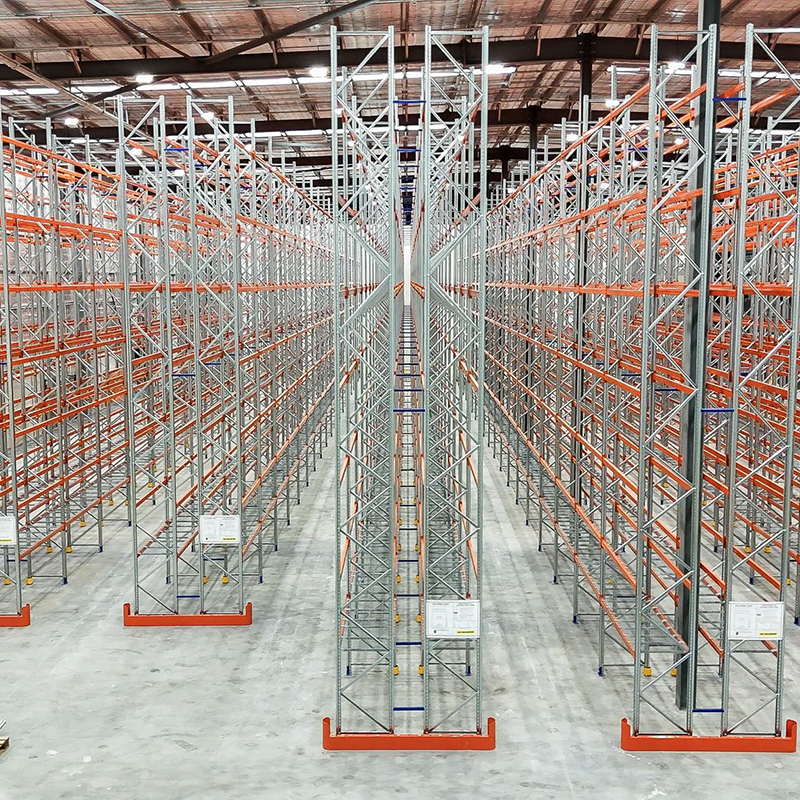
Warehouse aisles fall into three distinct categories based on equipment requirements. Each category offers a different balance of storage density and operational speed. Selecting the right category depends on your facility's specific throughput demands and available footprint.
Conventional wide aisles are typically 11 to 13 feet wide. The U.S. industry standard is exactly 12 feet (3.65 m). These dimensions accommodate standard sit-down counterbalance forklifts. Compact 3-wheel models can sometimes operate in a minimum aisle width of 10 feet 6 inches. Standard 4-wheel models require the full 12-foot standard for optimal throughput.
Wide aisles offer the lowest overall storage density. However, they allow for high-speed operation and two-way traffic. They also utilize the most common, cost-effective forklifts available on the market. Operators can navigate these aisles quickly, passing each other without issue, which keeps pallet movement rates high during peak shifts.
Implementing narrow aisle racking generally requires aisles between 8.5 to 10 feet wide. This setup relies on specialized equipment. Standard reach trucks generally require an aisle width of 8.5 to 9 feet. Double-reach trucks typically require wider aisles of 9.5 to 10 feet. This extra space handles the deeper reach mechanism and extended load depth.
This layout recoups roughly 20-25% of floor space compared to wide aisles. It requires operators to have specific training for reach trucks. Equipment costs are moderate compared to standard forklifts. The trade-off is a slight reduction in travel speed, as operators must be more careful when entering and exiting the narrower space.
Very narrow aisles are typically 6 to 6.5 feet wide. They are always less than 9 feet. This layout requires turret trucks or articulated forklifts like Bendi or Flexi models. VNA maximizes storage density to the absolute limit. It often requires wire or rail guidance systems to keep the equipment centered. This category carries the highest equipment costs and strict operational limitations. Traffic is usually one-way, and passing is impossible.
Aisle Category | Typical Width | Required Equipment | Storage Density |
|---|---|---|---|
Wide Aisle (Conventional) | 11' - 13' | Standard Counterbalance Forklifts | Low |
Narrow Aisle (NA) | 8.5' - 10' | Reach Trucks / Double-Reach Trucks | Medium - High |
Very Narrow Aisle (VNA) | 6' - 6.5' | Turret Trucks / Articulated Forklifts | Maximum |
Guessing aisle width leads to expensive mistakes. You must calculate the exact dimension using specific formulas and equipment data. Relying on generic rules of thumb will eventually result in damaged racks or trapped equipment.
The Right Angle Stack (RAS) is the minimum space a forklift requires to turn 90 degrees and insert or extract a load. You cannot measure this yourself accurately. You must source exact RAS specifications from the MHE manufacturer's data plate or technical manual. Every forklift model has a unique RAS value based on its wheelbase, counterweight size, and steering geometry.
Calculations usually start with a standard 40-inch wide by 48-inch deep pallet. However, pallet loads rarely sit perfectly flush. You must account for load overhang. Add 3 to 4 inches of load overhang to the depth calculation to prevent scraping. If your load extends 3 inches past the front of the pallet, your effective load length increases, which directly impacts the turning radius required.
The standard calculation is: Aisle Width = RAS + Load Length + Clearance. Clearance requirements vary based on operator skill and facility rules. We recommend adding 12 to 18 inches to the RAS. This allows for safe maneuverability, operator error, and pivoting without striking the racking system. An absolute minimum 8-inch clearance may be used in highly space-constrained environments. This requires highly skilled operators and increases the risk of rack damage.
Obtain the exact RAS measurement from your forklift manufacturer.
Measure your longest typical pallet load, including any overhang.
Determine your required safety clearance buffer (12 inches is standard).
Add these three numbers together to find your minimum aisle width.
Designing a warehouse layout requires balancing competing priorities. You must weigh storage density against operational accessibility. Every inch you take away from the aisle is an inch you give to storage, but it also tightens the operating environment.
Evaluate the cost of racking infrastructure versus the cost of specialized MHE. Narrowing aisles saves real estate costs. However, it shifts CapEx to expensive turret or reach trucks. You must calculate the return on investment for both scenarios. Buying a fleet of specialized narrow-aisle trucks requires a significant upfront investment, plus ongoing specialized maintenance.
Analyze how narrow aisles impact pick rates. Tighter aisles require slower travel speeds. Operators need more precise handling. This can reduce pallets-moved-per-hour if not managed correctly. High-velocity operations often benefit from slightly wider aisles to maintain speed. If your facility turns inventory rapidly, the speed gained from wider aisles might outweigh the storage capacity lost.
Assess your building limitations carefully. Note column spacing, ceiling height, and fire suppression layouts. VNA systems require super-flat floors with high F-min ratings. This prevents mast sway at high elevations. Retrofitting standard floors to meet these requirements can be cost-prohibitive. A slight dip in the floor translates to inches of sway at the top of a 30-foot mast, which can cause the forklift to strike the racking.
Changing aisle widths introduces new operational risks. You must implement strategies to protect your equipment and personnel. Narrower aisles leave less room for error, meaning your safety protocols must be tighter.
Narrower aisles exponentially increase the risk of forklift impacts on uprights. You must mitigate this risk proactively. We recommend mandatory installation of heavy-duty column protectors. End-of-aisle guards and reinforced baseplates are also essential. These physical barriers absorb impacts and protect the structural integrity of the racking. Replacing a damaged upright is far more expensive and disruptive than installing a guard.
Designing aisles for a specific, proprietary forklift model locks the facility into that equipment. If that manufacturer discontinues the model, you face a major problem. Design aisles with a slight buffer to accommodate multiple MHE brands. Audit future inventory profiles before bolting racks to the floor. If your product lines change and you start handling longer pallets, your aisles might suddenly become too tight to operate in safely.
Audit your current forklift fleet and document the exact RAS for each model before planning any layout changes.
Measure your actual pallet loads on the floor to determine the true maximum load length, including all overhang.
Calculate your required aisle width using the strict formula: RAS + Load Length + Clearance Buffer.
Engage a structural engineer or racking integration specialist to run CAD simulations of the proposed layout.
Verify compliance with local fire codes and MHE turning radii before finalizing procurement and installation.
A: A standard counterbalance forklift requires an aisle width of 11 to 13 feet. The industry standard is 12 feet (3.65 m) for safe operation with most sit-down 4-wheel models. Compact 3-wheel models may navigate aisles down to 10 feet 6 inches.
A: RAS is a specific metric provided by the forklift manufacturer. The final aisle calculation is the manufacturer's RAS plus the Load Length plus a clearance buffer. This buffer is typically 12 to 18 inches for standard operations, or an 8-inch absolute minimum.
A: Yes, you can convert standard aisles by unbolting and moving the racks closer together. However, this requires purchasing specialized reach trucks and potentially upgrading your floor flatness to handle the new equipment safely.
A: The main differences are dimension and equipment. Narrow aisles are 8.5 to 10 feet wide and use reach or double-reach trucks. VNA systems are 6 to 6.5 feet wide and require turret trucks or wire guidance systems.
A: Pallet overhang increases the effective length of your load. A 48-inch deep pallet with a 3-inch overhang on both front and back acts as a 54-inch load. This requires a wider turning radius and a wider aisle.
A: OSHA does not mandate a specific inch-count for pallet rack aisles. However, standard 1910.176 requires aisles to be wide enough for safe mechanical handling and kept clear of obstructions.