- All
- Product Name
- Product Keyword
- Product Model
- Product Summary
- Product Description
- Multi Field Search

Views: 0 Author: Site Editor Publish Time: 2026-09-01 Origin: Site
Warehouse operators constantly fight to maximize storage density without sacrificing throughput or forklift operator safety. Traditional high-density systems like drive-in racking create severe operational bottlenecks. Operators must navigate narrow lanes, increasing the risk of catastrophic rack damage and severely limiting SKU accessibility. Fully automated AS/RS solutions solve these physical limitations but require massive capital expenditures that many facilities cannot justify. You need a practical middle ground.
Deploying shuttle racking decouples the forklift from the storage lane. This optimizes both space utilization and operational speed. Operators stay safely at the aisle face while the system handles deep-lane transport autonomously. This approach minimizes rack impacts, drastically reduces pallet retrieval times, and keeps your warehouse moving efficiently.
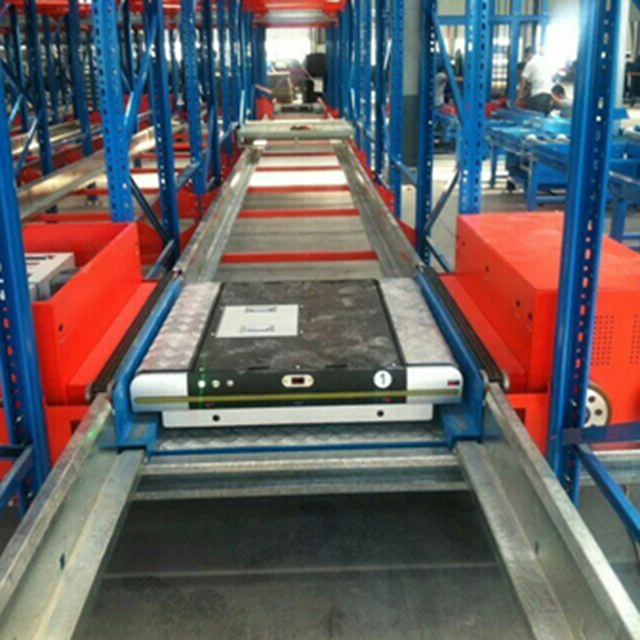
Operational Mechanism: Shuttle systems utilize low-profile, battery-powered carts to autonomously load and retrieve pallets within deep storage lanes, eliminating the need for forklifts to enter the rack structure.
Configuration Flexibility: Supports both Last-In, First-Out (LIFO) and First-In, First-Out (FIFO) inventory management, making it adaptable for bulk storage, seasonal goods, and perishable items.
Technological Evolution: Modern systems range from standard 2D (linear) radio shuttle racking to advanced 4D (multi-directional) intelligent automated radio shuttle rack systems.
ROI Drivers: Primary value stems from a 50-80% increase in storage capacity compared to selective racking, combined with significant reductions in labor costs, equipment wear, and rack damage.
Implementation Prerequisites: Successful deployment requires precise floor leveling, standardized pallet quality, and strategic integration with Warehouse Control Systems (WCS) and Warehouse Management Systems (WMS).
Understanding the physical operation of radio shuttle racking requires examining its individual components on the floor. The system relies on precise structural engineering and robust mechanical parts. Every component works together to move heavy loads safely across deep lanes.
The rack structure forms the foundation of the system. Engineers design specialized galvanized steel rails to guide the shuttle cart. Heavy-duty support beams bear massive high-density static loads, transferring the weight down through the uprights to the concrete slab. Entry guides sit at the front of each lane. These flared steel guides facilitate smooth pallet hand-offs from the forklift. They physically correct minor alignment errors during loading, preventing pallets from catching on the rail edges.
The radio shuttle cart acts as the primary workhorse. This battery-operated vehicle travels along the embedded rails directly beneath the stored pallets. The cart features a precision hydraulic lifting platform. When positioned under a pallet, this platform raises the load roughly 25mm to 40mm, just enough to clear the support rails. Polyurethane wheels ensure smooth travel and distribute the point load evenly across the rail surface.
On-board intelligence prevents accidents and ensures positional accuracy. Modern carts feature integrated photoelectric sensors and LiDAR scanners. They use mechanical bumpers for physical anti-collision safety. These sensors detect pallet overhangs, broken bottom boards, and debris on the track. They ensure precise pallet positioning deep within the lane, maintaining a consistent gap between loads to prevent product crushing.
Control systems direct the fleet across the warehouse. Operators use industrial-grade remote controls or ruggedized tablet interfaces. Advanced facilities use direct Warehouse Control System (WCS) integration over a dedicated Wi-Fi network. WCS integration allows automated dispatching. Operators can issue commands to load, retrieve, or continuously count inventory. They can also command the shuttles to reorganize and compact lanes during shift changes.
The daily operation follows a strict, repeatable sequence. This standardized workflow keeps the forklift out of the rack structure entirely.
Pallet Induction: A forklift operator picks up the shuttle cart using standard forks. They place it at the front of the designated storage lane, resting it securely on the entry guides.
Load Placement: The operator retrieves a pallet from the receiving dock. They drive to the aisle face and place this pallet directly onto the shuttle's lowered lifting platform.
Autonomous Transport: The operator presses the load button on the remote. The shuttle lifts the pallet slightly off the resting rails. The cart transports the load horizontally to the deepest available position in that specific lane.
Pallet Deposit: The shuttle lowers the pallet onto the support rails. The hydraulic platform retracts.
Return Trip: The empty cart travels back to the front face at maximum speed, ready to receive the next load.
Retrieval reverses this exact process. The shuttle travels to the nearest pallet, lifts the load, and brings it to the aisle face for the forklift to extract. Shuttles also perform lane compaction. You can program them to pull scattered inventory closer to the picking face. This compaction accelerates future picking operations and maximizes available space at the back of the lane.
Facilities handle different types of inventory with varying turnover rates. Your storage configuration must match your product lifecycle and outbound shipping schedules. Shuttle systems adapt easily to various inventory management strategies, allowing you to design the rack layout around your specific operational needs.
LIFO system design requires only one access aisle. Loading and unloading occur from the exact same rack face. The forklift places a pallet at the front, and the shuttle pushes it deep into the lane. When retrieving, the shuttle brings the closest pallet to the front. This means the newest inventory leaves the rack first.
This configuration suits low-SKU, high-volume environments perfectly. Beverage distribution centers rely heavily on LIFO because they produce massive runs of identical products. Manufacturing buffer storage uses it to hold bulk raw materials before they hit the production line. Paper goods facilities also benefit from this dense, single-aisle approach, as expiration dates rarely factor into their shipping logic.
FIFO system design requires two separate access aisles. One aisle handles all loading operations. The opposite aisle handles all extraction operations. The forklift places the pallet on the loading side. The shuttle transports it all the way to the extraction face, or directly behind the previous pallet. This creates a continuous flow of goods from one side of the rack block to the other.
Fast-Moving Consumer Goods (FMCG) require strict FIFO control to prevent spoilage. Pharmaceuticals demand exact expiration rotation to comply with federal regulations. Cold storage facilities use FIFO for date-sensitive food inventory like dairy and meat. This setup guarantees older stock leaves the facility first, drastically reducing inventory write-offs due to expiration.
Warehouses experience massive seasonal volume spikes. Traditional racking requires permanent physical expansion to handle these peaks. Shuttle systems offer unique dynamic scalability. You can scale your throughput independently of your physical storage capacity without altering a single piece of steel.
Facilities simply deploy additional shuttle carts during peak seasons. You can rent extra carts for the holiday rush. More carts mean faster lane clearing and higher pallets-per-hour metrics. When peak season ends, you return the rented carts. Your baseline operation continues normally with your core fleet. This flexibility prevents you from over-equipping your facility for year-round operations based on a three-month peak.
Warehouse managers must compare technologies objectively before committing to a facility upgrade. automated shuttle racking competes directly with several traditional high-density methods. Each system presents specific trade-offs regarding safety, speed, lane depth, and maintenance requirements.
Drive-in racks force forklifts to drive physically inside the rack structure. Operators must navigate tight clearances, often leaving less than two inches of space on either side of the truck. This causes frequent collisions. Forklifts clip uprights, shear off baseplates, and bend support beams. Drive-in lanes typically max out at 10 to 15 pallets deep because the travel time and collision risk become too high beyond that point.
Shuttle systems eliminate forklift-in-rack collisions entirely. The operator never enters the structure. They operate significantly faster because the forklift travels in wide, clear aisles. Shuttles allow for much deeper lanes. You can easily build lanes 50 or more pallets deep, maximizing the use of your building's footprint.
Pallet flow relies entirely on gravity and mechanical rollers. These systems require a vertical incline, usually a pitch of half an inch per foot. This incline eats up vertical storage space. Poor quality pallets frequently jam the rollers. A single broken bottom board can stop a 20-pallet lane dead, requiring dangerous manual intervention to clear the jam.
Shuttles offer controlled, horizontal movement. They do not rely on gravity, so the rails sit perfectly level. You can build deeper lanes without sacrificing vertical storage space to an incline pitch. Shuttles handle slight pallet variations much better than gravity rollers, as the pallet rests statically on the rails rather than rolling over hundreds of individual bearings.
Push-back systems use nested steel carts on an inclined rail. The forklift must physically push the existing pallets uphill to load a new one. This requires massive force from the forklift mast and transmission. The operator must carefully control the speed when extracting a pallet, as gravity forces the remaining pallets forward.
Push-back racking is typically limited to 4 to 6 pallets deep. The physical force required becomes too great beyond that depth, and the nested carts take up too much vertical space. Shuttle systems remove this depth limitation entirely. The motorized cart does all the heavy lifting, saving your forklift fleet from excessive transmission wear.
Semi-automated systems use manual forklifts for aisle-to-aisle shuttle transfer. Operators still control the main floor movement, bringing pallets from the dock to the rack face. This keeps initial equipment costs manageable while still providing massive density gains.
Fully automated shuttle systems replace forklifts entirely. They use automated guided vehicles (AGVs) or massive stacker cranes to move pallets to the rack face. The crane then deploys the shuttle into the lane. This creates a completely touchless process. It requires massive capital expenditure and complex software integration. However, it offers maximum throughput, operates in the dark, and provides zero labor dependency.
System Type | Max Lane Depth | Forklift in Rack? | Power Source | Pallet Quality Dependency | Primary Advantage |
|---|---|---|---|---|---|
Drive-In Racking | 10-15 Pallets | Yes | Manual/Forklift | Low | Low initial equipment cost |
Pallet Flow | 15-20 Pallets | No | Gravity | Very High | Automatic FIFO rotation |
Push-Back | 4-6 Pallets | No | Manual Push | Medium | High selectivity for LIFO |
Shuttle Racking | 50+ Pallets | No | Battery Motor | High | Maximum depth and safety |
Upgrading to an intelligent automated radio shuttle rack transforms warehouse operations from the ground up. The technical features of the equipment translate directly into measurable operational outcomes on the floor. Facilities see immediate, verifiable improvements in space utilization, operational speed, and overall safety.
Deep-lane capabilities translate into verifiable footprint reduction. Traditional selective racking requires an operating aisle between every two rows of rack. This layout wastes massive amounts of cubic volume on empty air. Shuttle systems eliminate these intermediate forklift aisles entirely. You consolidate your storage into one solid block of rack.
Facilities often achieve 80% or higher volumetric utilization. You can store thousands of additional pallets in the exact same building footprint. This density prevents the need for costly facility expansions or off-site storage rentals. It maximizes the value of your existing real estate, allowing you to hold more inventory per square foot than any traditional method.
Shuttle systems decouple the forklift from the travel time inside the rack. In a drive-in system, the operator spends minutes driving deep into a lane, carefully backing out, and navigating to the next location. With a shuttle, the operator simply drops the pallet at the face and backs away immediately.
The operator can stage the next pallet or service a different lane while the shuttle works autonomously. This parallel processing effectively doubles operator productivity. It drastically reduces overall forklift travel time and eliminates bottlenecks in the main aisles. Fewer travel miles mean less wear and tear on your equipment, extending the lifespan of your forklift fleet.
Keeping heavy machinery out of confined storage aisles reduces severe operational risks. Forklifts frequently clip uprights in drive-in systems. Over time, these repeated impacts weaken the steel structure. This creates a severe risk of catastrophic rack collapse, which can destroy inventory and cause fatal injuries.
Shuttles quantify the reduction in product shrinkage. The autonomous carts handle pallets gently, lifting and lowering them with precision hydraulics. They eliminate human steering errors and rough handling. You see a massive drop in pallet damage and crushed product. Safety compliance improves across the board because operators stay in wide, well-lit main aisles with clear lines of sight.
Cold storage environments present unique operational challenges. Cooling cubic air space down to freezing temperatures costs an exceptional amount of money. Maximizing dense storage becomes critical to profitability. Every empty cubic foot of air in a freezer wastes energy and drives up utility bills.
Manufacturers design specialized shuttle variants specifically for sub-zero environments. These units feature sealed electronics to prevent condensation buildup when moving between temperature zones. They use heated internal components to stop mechanical grease from freezing solid. They operate efficiently in harsh environments down to -30°C. This extreme density keeps cold air trapped around the product, stabilizing temperatures and reducing the load on your refrigeration compressors.
Deploying a shuttle system requires careful planning and strict adherence to engineering standards. You cannot simply bolt rails to existing selective racks and expect the system to function. Facilities must meet strict structural and operational prerequisites. Proper integration ensures long-term system stability and prevents costly downtime.
Concrete slab requirements dictate the success of the entire installation. Structural engineers must evaluate floor flatness (FF) and floor levelness (FL) tolerances before installation begins. High-density static loads put immense, concentrated pressure on the concrete slab through the rack baseplates. The slab must possess the correct load-bearing capacity and thickness to prevent cracking or settling.
Pallet standardization remains a strict, non-negotiable necessity. You must use high-quality, uniform pallets across your entire operation. Grade A CHEP pallets work perfectly. Intact EPAL wooden pallets or rigid plastic pallets also perform exceptionally well. Broken bottom boards, missing stringers, or protruding nails cause shuttle jams. Weak pallets suffer from load deflection, bowing in the middle and triggering sensor faults or catching on the cart chassis.
The Warehouse Control System (WCS) acts as critical middleware for the operation. It translates high-level orders from your Warehouse Management System (WMS) into physical machine commands for the shuttle fleet. Proper software integration prevents data silos and ensures accurate inventory counts.
Intelligent shuttles interface directly with these inventory systems. This allows for real-time tracking of every pallet location within the deep lanes. The software handles automated batch picking, grouping orders together for faster extraction. API-driven task interleaving keeps the shuttles moving efficiently, preventing deadheading. Fleet management dashboards monitor battery levels, track cycle counts, and issue preventative maintenance alerts.
Battery management requires strict, documented protocols. Facilities must mitigate risks associated with battery lifecycles to maintain throughput. Lithium-ion batteries offer faster charging, deeper discharge cycles, and longer overall life than traditional lead-acid options. However, cold environments degrade battery performance, requiring specialized low-temperature cells.
You must establish clear charging protocols for your operators. Some facilities use manual swap-and-charge methods. Operators manually pull depleted batteries from the cart and swap them for fresh ones from a charging rack. Fully automated systems use opportunity charging stations. The shuttle docks itself at the front of the lane during idle moments to top up the charge autonomously.
Rescue protocols prevent extended downtime when things go wrong. Sometimes a shuttle breaks down deep inside a 40-pallet lane due to a sensor fault or dead battery. You cannot send a human walking on the rails to retrieve it. Systems include a specialized rescue cart. A working shuttle drags the rescue cart into the lane. It hooks onto the disabled unit mechanically and pulls it out to the aisle face. Manual retrieval hooks on long poles serve as a secondary failsafe for shallower lanes.
Take the following steps to begin your facility upgrade and implement a high-density storage solution:
Conduct a rigorous SKU profiling analysis to determine your ideal lane depths and turnover rates.
Audit your current pallet inventory to ensure strict quality, structural integrity, and standardization compliance.
Consult with a structural engineer to verify your concrete floor slab load-bearing capacities and levelness tolerances.
Define your exact LIFO or FIFO requirements based on product expiration rules and outbound shipping logic.
Draft a comprehensive RFP detailing your throughput requirements to evaluate top-tier automated racking vendors.
A: 2D shuttles move linearly forward and backward within a single storage lane. They require a forklift or stacker crane to move them between different lanes or levels. 4D shuttles can move forward, backward, left, and right. This multi-directional capability allows them to autonomously navigate across intersecting aisles in a highly complex, fully automated grid without forklift assistance.
A: The standard weight capacity typically ranges from 1,000 kg to 1,500 kg per pallet. This translates to roughly 2,200 to 3,300 lbs. Capacity depends heavily on the manufacturer, the rail design, and the specific cart model. Heavy-duty variants exist for specialized industrial applications requiring massive load support, such as metal manufacturing or heavy liquid storage.
A: Yes. Specialized cold-storage shuttles are engineered specifically for freezing temperatures. They feature sealed electronics to prevent condensation, heated internal components to keep grease viscous, and low-temperature lithium batteries. These modifications allow the carts to operate efficiently and continuously in harsh freezer environments down to -25°C or -30°C.
A: Standard industrial lithium-ion batteries typically provide 8 to 10 hours of continuous operation under normal loads. They require roughly 2 to 3 hours for a full recharge. Many facilities keep spare batteries on hand for hot-swapping during multi-shift operations. Fully automated systems often utilize opportunity charging stations to maintain power during idle periods.
A: Most systems include a specialized rescue shuttle function. A working shuttle is sent into the lane dragging a rescue cart. It latches onto the disabled unit and pulls the broken cart out to the aisle face for maintenance. Manual retrieval hooks on long poles are also provided as a mechanical failsafe for shallower lanes.
A: The ratio depends entirely on your desired throughput rather than your total storage capacity. You calculate the fleet size based on pallets moved per hour. A common baseline for semi-automated systems is one shuttle per two to three active forklifts. High-velocity operations or fully automated grids may require a one-to-one ratio to prevent bottlenecks.