- All
- Product Name
- Product Keyword
- Product Model
- Product Summary
- Product Description
- Multi Field Search

Views: 0 Author: Site Editor Publish Time: 2026-07-24 Origin: Site
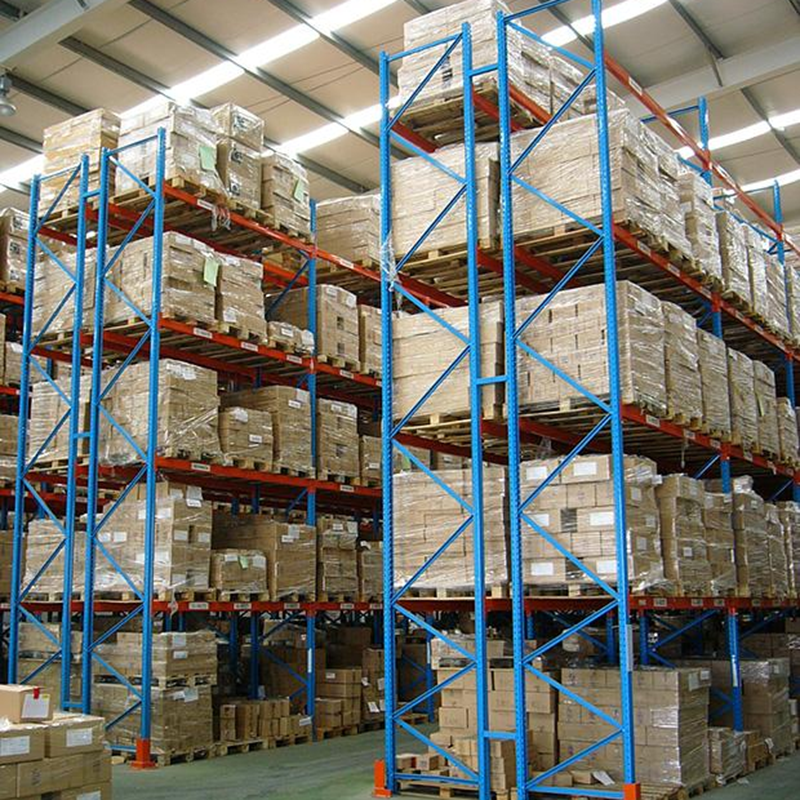
Managing thousands of distinct product lines creates inherent operational friction. Pick delays, search times, and inventory bottlenecks compound quickly when warehouse infrastructure fails to support the workflow. Facility managers constantly face a conflict between maximizing storage density and maintaining immediate access to individual SKUs. Rapid-fulfillment environments require instant retrieval without moving blocking pallets. Selective Pallet Racking serves as the foundational infrastructure for high-SKU operations. It prioritizes 100% accessibility and high picking frequency over deep-lane density. This structural approach ensures operators can reach any pallet at any time, optimizing warehouse operations and supporting rapid inventory turnover.
100% Direct Accessibility: Selective systems eliminate the need to move blocking pallets, directly reducing retrieval times and operational friction for high-variety, low-volume SKUs.
Optimal for Low Pallet-to-SKU Ratios: Facilities storing 1–3 pallets per SKU achieve maximum operational efficiency compared to high-density alternatives like drive-in or pushback racks.
Standardization Compatibility: While highly flexible, selective racking performs best when designed around standard pallet loads, maximizing beam utilization and vertical space.
Modular Scalability: The system easily integrates with carton flow lanes and shelving, supporting dynamic e-commerce fulfillment needs.
Footprint Trade-Off: The primary cost of total accessibility is reduced storage density, requiring strategic aisle planning and specialized material handling equipment to mitigate wasted space.
High SKU counts directly impact core operational metrics across the entire distribution center. Pick path travel time increases exponentially when inventory is disorganized or inaccessible. Labor costs rise as operators spend more time searching for specific products rather than executing picks. Inventory accuracy drops when pallets are constantly reshuffled to reach buried items. This reshuffling friction slows down the entire fulfillment cycle and increases the probability of product damage. When a forklift driver has to move three pallets just to access the one they need, the labor cost for that single pick quadruples. In a facility processing thousands of orders per shift, these micro-delays accumulate into massive productivity losses. Warehouse managers must design layouts that minimize this wasted movement. The physical infrastructure must align with the daily operational demands of the workforce.
Warehouse design requires a mathematical trade-off between utilizing physical volume and extracting pallets quickly. High-density systems maximize vertical and horizontal space but bury pallets behind one another. Single-deep systems sacrifice some floor space to guarantee immediate extraction. You must balance the cost of floor space against the cost of labor and delayed shipments. A facility might boast a massive pallet capacity, but if the throughput velocity is choked by poor accessibility, that capacity is effectively useless. We see this frequently in operations that over-index on drive-in racks for high-SKU profiles. The result is a gridlocked warehouse where operators spend half their shift moving inventory out of the way. Prioritizing throughput means accepting wider aisles and fewer total pallet positions in exchange for frictionless movement and faster order cycle times.
System Type | Accessibility | Storage Density | Best For |
|---|---|---|---|
Selective Racking | 100% | Low to Medium | High SKU count, fast turnover, mixed loads |
Double-Deep | 50% | Medium to High | Medium SKU count, batched orders |
Drive-In | Last-In, First-Out | Very High | Low SKU count, bulk storage, seasonal goods |
Pushback | Last-In, First-Out | High | Medium SKU count, high volume per SKU |
Warehouses with high SKU variety and high picking frequency must prioritize direct access. Deep-lane storage creates severe bottlenecks when multiple operators need different SKUs from the same lane simultaneously. Direct access prevents these traffic jams. It allows multiple forklifts to operate in the same aisle without blocking each other. When you analyze a heat map of warehouse picking activity, fast-moving items generate intense localized traffic. If these items are buried in high-density configurations, the congestion brings the entire zone to a standstill. By spreading fast movers across single-deep aisles, you distribute the traffic load evenly. This spatial distribution is a core principle of high-velocity fulfillment center design.
Strict First-In, First-Out (FIFO) inventory management becomes operationally complex as SKU variety scales. Perishable goods, pharmaceuticals, and date-sensitive materials require precise rotation. Selective layouts inherently support FIFO because operators can pick the oldest pallet without disturbing newer stock. This eliminates the need for complex unloading and reloading sequences. When a system forces operators to bypass FIFO protocols just to maintain picking speed, inventory spoilage and obsolescence rates skyrocket. Direct access ensures that the physical layout naturally enforces the inventory rotation rules established by the warehouse management system.
Roll-formed steel offers a strong cost-to-benefit ratio for standard warehouse environments. The teardrop-style punching allows for rapid beam adjustment without specialized tools. However, high-traffic facilities require more robust solutions. You must use heavy duty pallet racks constructed from hot-rolled structural steel in environments prone to frequent forklift impact. Structural steel withstands heavy loads and aggressive material handling equipment much better than roll-formed alternatives. The manufacturing process of structural steel creates a thicker, more rigid profile that resists twisting and buckling under extreme stress. In fast-paced cross-docking operations or beverage distribution centers, the abuse from heavy counterbalance forklifts will quickly destroy standard roll-formed uprights. Investing in structural components for the lower levels and high-traffic end aisles prevents catastrophic failures and reduces ongoing maintenance requirements.
Single-deep racking remains the standard configuration for absolute SKU accessibility. It supports fast-turnover profiles by ensuring every pallet faces the aisle. Double-deep racking offers a hybrid approach. It requires specialized reach trucks to access the second pallet position. This configuration sacrifices 50% of immediate accessibility to gain a 30% increase in storage density. When planning the configuration, you must analyze the pallet-to-SKU ratio. If you consistently hold three or more pallets of the same SKU, double-deep becomes a viable option because the front pallet blocking the rear pallet contains the exact same product. However, if you hold only one or two pallets per SKU, double-deep creates massive operational friction.
Analyze current and projected SKU counts to determine the required number of individual pick faces.
Calculate the average pallets-per-SKU ratio to evaluate the feasibility of double-deep configurations.
Measure the turning radius and lift height of your existing forklift fleet.
Determine the maximum pallet weight to specify the correct beam capacity and upright gauge.
Map the facility's column grid to optimize row placement and minimize wasted space.
Designing for standard pallet loads optimizes the entire system. Standardized loads dictate precise beam lengths and minimize wasted bay volume. Predictable clearances reduce the risk of structural damage during loading and unloading. When you standardize pallet dimensions, you maximize vertical space utilization across the facility. A standard 40x48 inch GMA pallet requires specific beam lengths, typically 96 inches for two pallets or 144 inches for three pallets. If your inbound freight arrives on irregular pallets, you must design the bays to accommodate the widest possible load, which inherently wastes space when standard pallets are stored in those same bays. Enforcing strict inbound pallet compliance allows you to tighten the clearances and squeeze more vertical levels into the building's clear height.
Direct access to every pallet position drastically reduces forklift travel time. Operators navigate straight to the required location without moving obstacles. This eliminates "honeycombing," which occurs when empty storage spaces become unusable because they are blocked by other pallets. Accelerated search-and-retrieval cycles directly lower labor hours per order. In a facility with 10,000 SKUs, the routing logic of the warehouse management system relies on predictable, unobstructed access to every location. If an operator arrives at a location and has to spend three minutes digging out a pallet, the entire pick wave falls behind schedule. Single-deep configurations ensure that the physical reality of the warehouse matches the digital expectations of the WMS.
Fast-turnover environments rely on rapid replenishment cycles. Immediate access supports these cycles by allowing put-away and picking operations to occur simultaneously. High-frequency picking demands a system where inventory moves in and out without friction. Selective systems keep fast-moving SKUs readily available at ground level. You can dedicate the first two levels to active picking while utilizing the upper levels for reserve storage. When a pick face depletes, a reach truck can immediately drop a replenishment pallet from the reserve location directly above it. This vertical adjacency minimizes the travel distance required for replenishment and ensures that pickers never wait for product.
Warehouses rarely handle perfectly uniform loads. Selective systems offer excellent flexibility for non-standard pallet sizes and varying weights. You can install wire decking or specialized crossbars to support mixed loads. This adaptability allows you to change inventory profiles without requiring systemic rack reconfiguration. If a new client requires storage for oversized crates or heavy industrial components, you can simply adjust the beam elevations and add heavy-duty wire decks to accommodate the new profile. This modularity is a massive advantage over engineered systems like drive-in or pallet flow, which are rigidly designed around specific pallet dimensions and weights.
Selective pallet racking serves as the structural baseline for multi-modal picking. E-commerce facilities rarely rely on full-pallet picks alone. They require a mix of pallet reserve storage, case picking, and individual item fulfillment. The standard rack structure provides the framework to support all these picking methods within a single footprint. You can configure one aisle for full-pallet extraction using reach trucks, while the adjacent aisle is set up for pedestrian case picking with pallet jacks. This hybrid approach allows you to consolidate different fulfillment streams under one roof, reducing the need for separate, specialized facilities.
You can easily retrofit lower rack levels with carton flow tracks. This supports high-speed, split-case picking directly from the aisle. Gravity feeds boxes to the pick face, keeping operators supplied with inventory. The upper levels maintain reserve storage, allowing for rapid replenishment of the flow lanes below. This setup is ideal for health and beauty products, electronics, or apparel, where orders consist of multiple small items. The carton flow beds condense dozens of SKUs into a very small horizontal footprint, drastically reducing the walking distance for the pickers. When a carton is emptied, it is removed, and the next carton slides forward automatically, ensuring a continuous supply of product at the pick face.
High-volume facilities often build vertically to maximize space. Heavy duty pallet racks possess the structural capacity to support multi-level pick modules. These engineered systems combine shelving, flow racks, and conveyors into a unified structure. They transform standard reserve storage into high-density fulfillment engines. A three-level pick module built on a structural rack framework can triple the amount of pickable SKUs within the same square footage. The robust uprights carry the load of the inventory, the steel grating walkways, and the personnel operating on the upper levels. This vertical integration is essential for e-commerce operations operating in urban areas where warehouse footprint is limited and expensive.
The primary trade-off for total accessibility is reduced storage density. Aisles consume a significant portion of the floor space in a selective system. Often, 50-60% of the total footprint is dedicated to forklift navigation. High-density alternatives like gravity flow or pushback systems utilize this space for storage, but they sacrifice immediate access. You must carefully evaluate the cost of this lost space against the operational benefits of speed and accuracy. In a facility with high land costs, the pressure to condense the aisles is intense. However, narrowing the aisles too much restricts equipment movement and slows down the operation, negating the benefits of the single-deep configuration.
Aisle width requirements dictate your forklift selection and capital expenditure. Standard counterbalance forklifts require wide aisles, typically 12 feet or more. Narrow Aisle or Very Narrow Aisle (VNA) equipment allows you to compress the aisle width to 5-7 feet. This reclaims floor space for storage but requires specialized, wire-guided machinery. VNA trucks are significantly more expensive than standard forklifts and require perfectly level floors to operate safely at high elevations. Furthermore, VNA aisles restrict passing; only one truck can operate in an aisle at a time. You must weigh the density gains of VNA layouts against the equipment costs and the potential throughput limitations caused by aisle congestion.
Equipment Type | Typical Aisle Width | Max Lift Height | Flexibility |
|---|---|---|---|
Standard Counterbalance | 12 - 14 feet | 20 - 24 feet | High (can load trucks) |
Reach Truck | 8 - 10 feet | 30 - 35 feet | Medium (indoor only) |
VNA Turret Truck | 5 - 7 feet | 40+ feet | Low (aisle restricted) |
Specifying aisles too narrow for existing forklift turning radiuses causes severe operational bottlenecks. It also increases the risk of rack damage from frequent collisions. You must conduct precise swept-path analysis before installation. Verify equipment compatibility with the proposed layout to ensure safe and efficient navigation. A common mistake is measuring the aisle from the center of the uprights rather than the face of the pallet overhang. If pallets overhang the beams by three inches on each side, a nominal 10-foot aisle is actually only 9.5 feet wide in practice. This miscalculation leads to scraped product, damaged uprights, and frustrated operators.
Exceeding beam deflection limits or upright capacities creates catastrophic failure risks. SKU weights often change over time as product lines evolve. Implement strict load-capacity signage on every rack row. Conduct regular engineering audits to verify structural integrity. Utilize heavy duty materials for high-risk, high-weight zones. When a facility transitions from storing lightweight consumer goods to heavy industrial fluids, the existing rack structure may not support the new load profile. Operators must be trained to recognize beam deflection and report any visible bowing immediately. Overloading a single bay compromises the stability of the entire row.
Improper anchoring and lack of seismic engineering present major regulatory risks in prone regions. Racks must withstand lateral forces during an earthquake. Require site-specific seismic calculations during the procurement phase. Install reinforced baseplates and heavier bracing to meet local building codes and protect your workforce. Seismic zones require larger footpads to distribute the load across the concrete slab and thicker anchors to prevent the uprights from shearing off during a seismic event. Ignoring these engineering requirements not only violates building codes but also puts the entire operation at risk of total collapse.
Selective pallet racking remains the undisputed standard for high-SKU, high-turnover facilities. The cost of inaccessible inventory and slow picking times heavily outweighs the cost of floor space in these environments. Direct access ensures rapid fulfillment and accurate inventory control.
Conduct a thorough pallet-to-SKU ratio analysis across your inventory to confirm single-deep storage is the correct application.
Consult with structural engineers to determine the optimal aisle configuration and rack material based on your specific forklift fleet.
Establish clear load ratings based on your heaviest anticipated product lines and post visible signage on every aisle.
Implement a strict inspection schedule to identify and replace damaged uprights or deflected beams immediately.
A: Selective racking provides 100% direct accessibility to every pallet, optimizing pick speed and inventory turnover. High-density racking stores pallets multiple deep, maximizing floor space utilization but requiring operators to move front pallets to access rear inventory.
A: Facilities should upgrade when handling extreme load weights or operating in high-frequency forklift traffic areas. Freezer environments and structural pick module integrations also require the durability and impact resistance of structural steel.
A: The ideal ratio sits between 1:1 and 3:1. At this low ratio, selective racking outperforms high-density systems because it prevents operators from wasting time digging through deep lanes to find specific items.
A: Yes. Because every pallet faces the aisle and is directly accessible, strict First-In, First-Out rotation is inherently supported. Operators can retrieve the oldest pallet without moving or disturbing newer stock.
A: Aisle width depends entirely on the material handling equipment. Standard counterbalance forklifts require 12+ feet. Reach trucks need 8-10 feet. Very Narrow Aisle (VNA) wire-guided trucks can operate in aisles as narrow as 5-7 feet.
A: You can install wire decking, industrial shelving, or carton flow tracks on the ground-level beams. This creates a dedicated zone for individual item picking while the upper levels maintain reserve pallet storage.