- All
- Product Name
- Product Keyword
- Product Model
- Product Summary
- Product Description
- Multi Field Search

Views: 0 Author: Site Editor Publish Time: 2026-05-27 Origin: Site
Surging inventory volumes often expose critical operational bottlenecks in modern fulfillment centers. Warehouses frequently struggle to scale high-frequency, non-palletized SKU storage without resorting to excessive floor expansion. They often misallocate resources by forcing heavy-duty racking into zones requiring quick manual access. This mismatch creates severe workflow inefficiencies and limits vertical space utilization. Managers need a specialized storage tier to handle medium-weight, bulky goods safely.
Enter Longspan Shelving. We introduce this specific racking category as the optimized middle-tier solution. It elegantly bridges the vast capability gap between light-duty bolt-on shelves and heavy machinery-dependent pallet racks. You will discover its baseline mechanical specifications, key operational benefits, and structural compliance standards. By evaluating these factors objectively, facility operators can drastically improve layout accessibility. You will learn to optimize floor space metrics and streamline daily picking workflows without relying on cumbersome equipment.
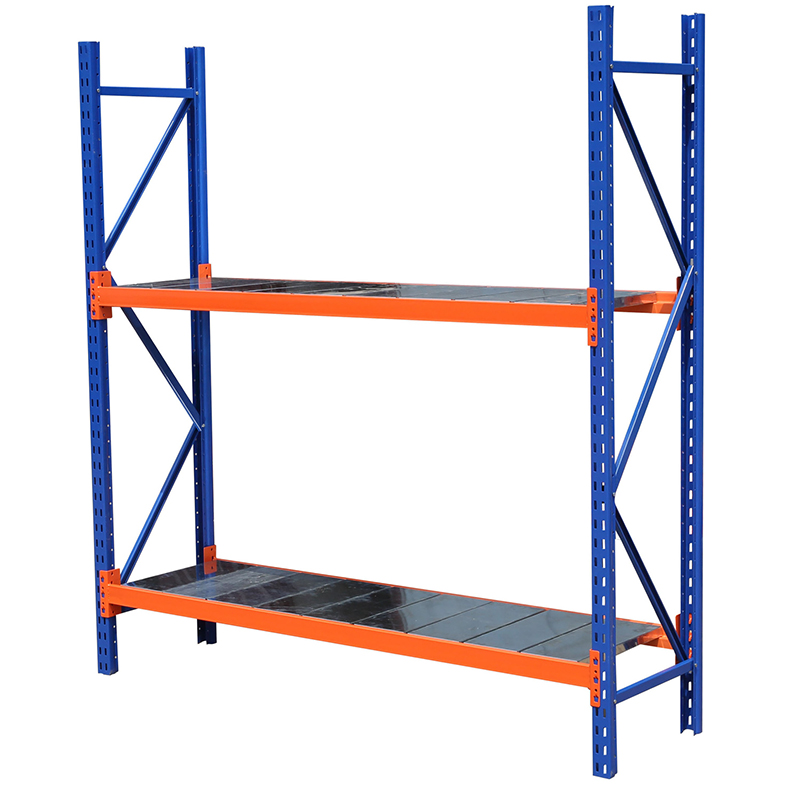
Longspan shelving is optimized for manual-pick environments, supporting spans of 1 to 2.5 meters and per-level capacities of 200–600 kg.
The boltless, modular design allows for rapid reconfiguration without significant operational downtime.
It operates effectively alongside pallet racking in a "hybrid" layout to separate bulk storage from active fulfillment zones.
Safe implementation requires strict adherence to Uniformly Distributed Load (UDL) guidelines and facility infrastructure assessments (e.g., uneven floors, sprinkler dead zones).
Facility managers must first define the exact structural category of their storage systems. Manufacturers explicitly engineer longspan systems for manual-access, high-density inventory. They do not support forklift loading or mechanized retrieval. Attempting to place standard pallets onto these frames compromises structural integrity. Instead, these bays serve hand-loaded goods. Operators walk directly to the shelf, locate the precise item, and retrieve it manually.
You must understand the baseline specifications to deploy these bays correctly. The physical architecture relies on continuous step beams. These horizontal beams bypass the upright frames entirely. This design choice creates uninterrupted horizontal spans ranging from 1 to 2.5 meters. You gain continuous storage space without vertical steel posts blocking your boxes. Standard load capacities typically range from 200 to 600 kg per tier. This robust capacity supports heavy, awkwardly shaped items easily.
Industry leaders apply these racks across various specialized sectors. Reviewing successful Longspan Shelving implementations reveals several ideal use cases:
Automotive Parts and Molds: Garages store long exhaust pipes, heavy bumpers, and dense machinery molds efficiently.
E-commerce Fulfillment Centers: Facilities organize thousands of mixed-SKU picking bins for rapid daily dispatch.
Retail Backrooms: Store managers maximize cramped stockroom footprints by organizing seasonal inventory overflow.
Archive Rooms: Corporate offices stack densely packed document banker boxes securely without bowing the shelves.
Deploying the right shelving directly impacts your daily operational workflow. Wide, open-face designs deliver 100% SKU accessibility. Pickers see every item instantly. This open structure eliminates visibility blind spots completely. It also supports rigid First-In-First-Out (FIFO) stock rotation. Staff can load fresh inventory from the rear and pick older items from the front. Furthermore, adjustable beam heights allow managers to position fast-moving goods at ergonomic heights. Workers avoid excessive bending or dangerous overreaching.
You maximize warehouse space without wasting valuable steel. Standard shelving limits vertical growth. However, operators can stack these engineered bays vertically up to the ceiling. You can place low-frequency items on the highest tiers. Utilizing vertical space proves far more cost-effective than purchasing or leasing additional warehouse square footage.
Future-proof modularity remains a critical advantage for growing businesses. The boltless lock-in systems utilize simple safety clips rather than complex hardware. Warehouses can scale operations seamlessly. You simply add extension bays alongside existing units as your inventory grows. You never need to dismantle or overhaul the entire original system. A rubber mallet is often the only tool required for reconfiguration.
Material adaptability allows precise alignment with your specific inventory types. Facility managers can choose from several shelf decking options. We summarize the most common material choices below:
Decking Material | Ideal Applications | Primary Workflow Benefit |
|---|---|---|
Particle Board / Chipboard | Dry goods, packaged textiles, lightweight bins | Provides a smooth, snag-free surface for sliding boxes. |
Wire Mesh Panels | Fire compliance zones, high-dust environments | Allows overhead sprinkler water penetration and improves lighting. |
Galvanized Steel Plates | Heavy tools, liquid containers, oily machine molds | Delivers maximum durability and resists liquid absorption. |
Choosing the correct storage infrastructure demands a clear evaluation framework. Many operators confuse heavy-duty manual shelving with industrial pallet racking. You must base your decision on handling methods, specific load types, and facility budgets.
Consider the handling method first. Manual operations dictate step beams and flat decking. Mechanical operations require forklifts and reinforced load beams. Load type also dictates the infrastructure. Individual boxes, plastic bins, and loose parts belong on manual shelves. Conversely, stretch-wrapped, standardized wooden pallets require dedicated pallet bays.
Advanced warehouses frequently employ a hybrid approach. This win-win strategy maximizes both bulk storage capacity and rapid picking speed. Facility planners deploy tall pallet racking for bulk, reserve stock. They then utilize longspan units underneath these high bays or in adjacent active zones. Workers pick fast-moving, high-frequency items from the accessible lower shelves. Meanwhile, forklifts safely manage the reserve pallets high above the pedestrian traffic.
Assumption transparency is crucial for safe engineering. Operators often assume manual shelves can handle any small object. While this system effectively manages heavy small parts, you must avoid intense localized point-loads. Placing a massive, dense steel block in the dead center of a wooden deck will cause severe beam deflection. The system is engineered for distributed weight, not focused impact pressure.
Safety begins with understanding the Uniformly Distributed Load (UDL) principle. You must educate your buyers and warehouse staff on this structural reality. Load limits explicitly rely on weight being distributed evenly across the entire shelf surface. If a beam is rated for 500 kg, you cannot place a 500 kg engine block in the exact center. Concentrating the weight invites deck snapping and beam failure. You must spread boxes end-to-end to maintain structural integrity.
Navigating physical facility constraints requires proactive planning. Installers must identify infrastructural "dead zones" before bolting frames together. Overhead lighting fixtures require unobstructed clearance. HVAC vents must blow freely to regulate warehouse temperatures. More importantly, strict fire codes dictate clearance around overhead sprinkler heads. Your topmost shelves cannot block these critical life-safety systems.
Ground engineering dictates the long-term stability of your aisles. Warehouse floors are rarely perfectly flat. Installers face uneven concrete daily. They must use specialized metal shim plates beneath the upright baseplates. This ensures the frames stand perfectly plumb. Furthermore, crews must utilize heavy-duty ground anchors. Driving expansion bolts into the concrete prevents catastrophic tipping. Ground anchoring proves absolutely mandatory in high-traffic forklift zones or active seismic regions.
Environmental degradation risks threaten standard steel heavily. You must evaluate the ambient conditions of your facility. Standard painted steel remains vulnerable to moisture-causing chemicals. Cold storage units generate intense condensation daily. This constant moisture accelerates rust and structural decay. We strongly recommend galvanized steel components or specialized anti-corrosive powder-coated finishes for these demanding environments.
Securing durable warehouse infrastructure requires rigorous vendor vetting. You must evaluate vendor expertise beyond their marketing brochures. A credible Longspan Shelving manufacturer provides comprehensive engineering support. They supply clear, documented load-rating certifications for every beam profile. You are not simply purchasing raw, welded metal. You are investing in a tested, certified structural system designed to protect your staff.
Buyers must heavily scrutinize supply chain continuity and component availability. Beware the risk of proprietary lock-in. Some vendors utilize highly unique punch-hole patterns on their uprights. If they discontinue that product line, you cannot expand your aisles later. Ensure the manufacturer guarantees the long-term availability of matching uprights, step beams, and locking safety pins. Your storage system will require future expansions.
Assess the vendor's customization capabilities before finalizing a purchase order. Standard bays solve basic problems, but tailored accessories optimize complex workflows. A strong manufacturing partner supplies customized add-ons. You might need specialized shelf dividers to separate identical small parts. You might require integrated plastic bin rails for hardware sorting. They should also offer varied decking materials to match your exact fire compliance or load-bearing requirements.
Optimizing your warehouse storage requires deliberate, data-driven decisions. Begin your shortlisting logic by auditing your heaviest non-palletized SKU. Measure your precise floor-to-ceiling space to identify vertical growth opportunities. Determine definitively whether manual picking remains your primary retrieval method. If your team hand-loads bulky, medium-weight items, this intermediate storage tier solves your operational bottlenecks.
Take actionable next steps to secure your investment. Do not purchase steel frames blindly based on rough estimates. We strongly encourage buyers to consult with a structural storage engineer. Draft a precise CAD layout of your facility first. Account for sprinkler dead zones, floor unevenness, and workflow aisles. Proper upfront planning guarantees a safe, high-performing storage environment that scales effortlessly alongside your business.
A: Yes, but standard steel will degrade. It requires galvanized steel or specialized anti-corrosive coatings, and the deck material must be moisture-resistant (no raw particle board).
A: Calculate the total weight of items per shelf, ensuring it falls within the 200-600kg UDL range, and select a span length (typically 1m-2.4m) that accommodates your largest bulky item without wasting horizontal space.
A: While the boltless design makes basic assembly straightforward, professional installation is strongly recommended for high-bay configurations to ensure proper leveling with shim plates and secure floor anchoring.